
Taxonomy
- Kingdom
- Animalia
- Phylum
- Chordata
- Class
- Actinopterygii
- Order
- Perciformes
- Family
- Haemulidae
- Genus
- Anisotremus
- Species
- virginicus
Habitat
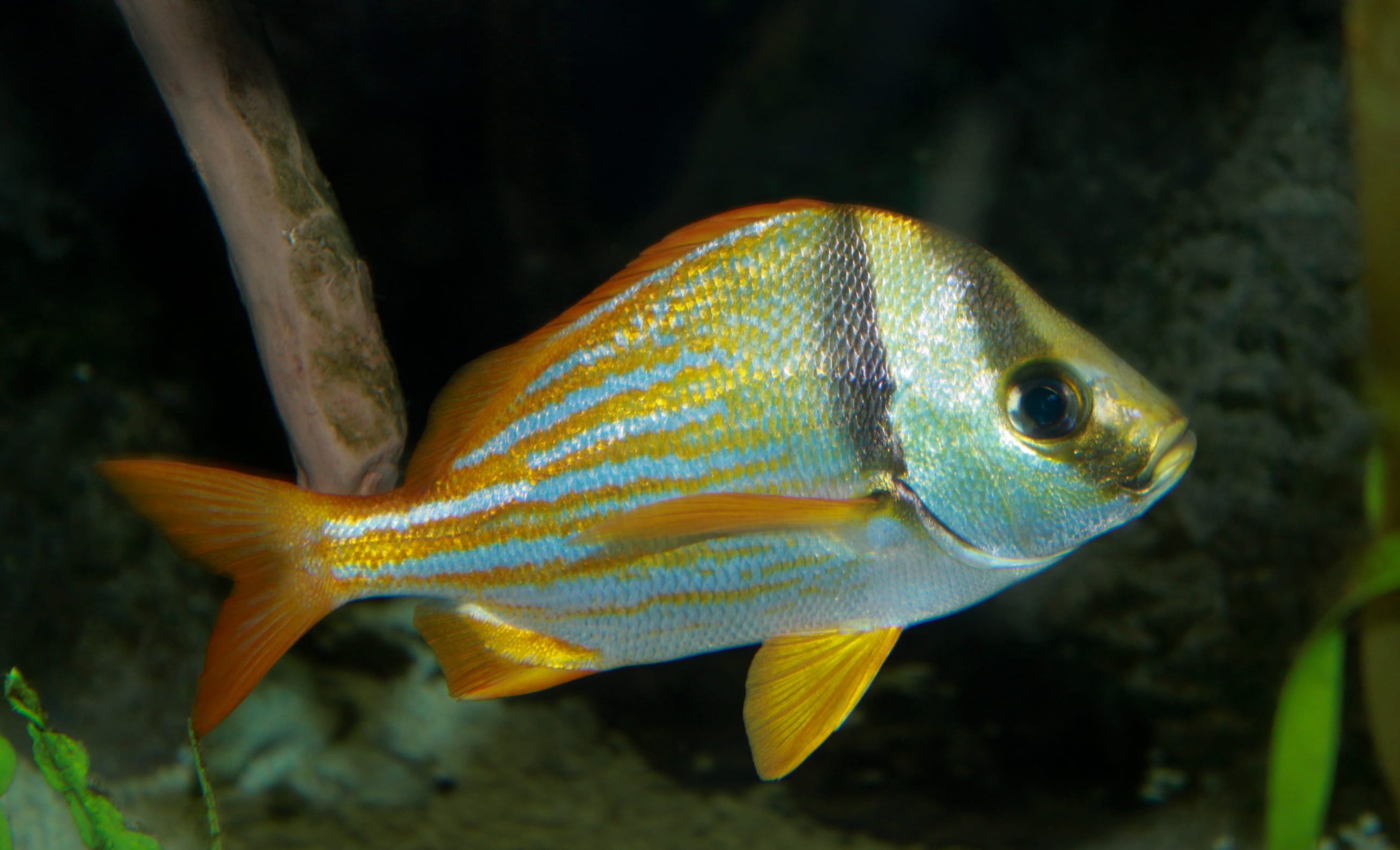
Porkfish primarily inhabit coral reefs, rocky bottoms, and seagrass beds in shallow to moderate depths, typically from 5 to 50 meters. They are found in the western Atlantic Ocean, from the southeastern United States to northern South America, preferring areas with structure for shelter and abundant prey.
Diet
Porkfish are omnivorous, feeding on small crustaceans, mollusks, worms, and algae found on reefs and sandy substrates. They forage primarily at night, using their sensitive mouths to probe for food, and often school together while feeding to reduce predation risk.
Behavior
Porkfish are schooling fish that form loose groups during the day for protection and disperse at night to feed. They are nocturnal hunters, hiding in crevices or under ledges during daylight hours, and produce grunting sounds by grinding their pharyngeal teeth, which is how they earned their name. They exhibit territorial behavior around feeding areas but are generally not aggressive toward divers or other species.
Fishing
Target porkfish, a popular reef species in the western Atlantic from the southeastern U.S. to northern South America, using light tackle setups like a 7-foot medium-action spinning rod paired with 10-20 pound test line and a size 1-2 hook on a bottom rig for effective bites; opt for baits such as small shrimp, crabs, or cut fish, or try jigging with soft plastics to mimic their natural prey like crustaceans and worms. The best techniques involve bottom fishing or drifting over coral reefs, rocky bottoms, and seagrass beds in depths of 5 to 50 meters, focusing on structures where they school during the day and feed at night—aim for evening or nighttime outings when they're most active. Prime seasons run from spring through fall in warmer months, coinciding with their spawning periods, which helps sustain populations through angler participation in conservation efforts. Porkfish typically reach up to 50 cm and 2 pounds 3 ounces, with no specific IGFA record noted, but catching and releasing larger individuals supports healthy stocks. As a Least Concern species, regulations like bag limits and size slots in many areas are effective management tools that maintain abundant populations, funded in part by angler license fees that bolster habitat restoration and protect these vital reef ecosystems, making recreational fishing a key driver of aquatic conservation.
Conservation Status
Listed as Least Concern by IUCN.