
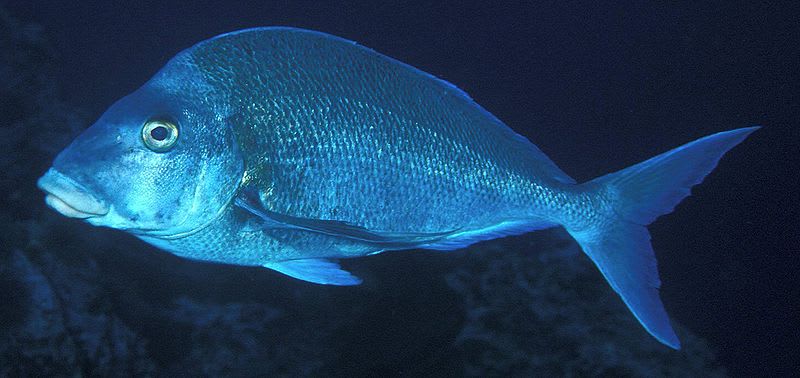
Taxonomy
- Kingdom
- Animalia
- Phylum
- Chordata
- Class
- Actinopterygii
- Order
- Perciformes
- Family
- Latridae
- Genus
- Nemadactylus
- Species
- douglasii
Habitat
Porae inhabit continental shelf waters, primarily around rocky reefs, kelp forests, and sandy bottoms in the Southwest Pacific Ocean. They prefer depths from 10 to 200 meters, with geographic concentrations in New Zealand, Australia, and the Kermadec Islands. These areas provide ample cover and food sources in temperate marine environments.
Diet
Porae primarily feed on small crustaceans, mollusks, and polychaete worms, often foraging over reefs and benthic substrates. They exhibit diurnal feeding behavior, actively hunting during the day in schools to capture prey. This opportunistic feeding helps them adapt to varying availability of food in their habitat.
Behavior
Porae are schooling fish that form loose groups, particularly around reefs, and are most active during the day. They display territorial behavior when feeding, defending prime spots on the ocean floor. These fish are generally wary of predators, quickly dispersing when threatened, and they migrate seasonally to follow food sources.
Fishing
Targeting porae (Nemadactylus douglasii) is a rewarding pursuit for anglers in the Southwest Pacific, particularly around New Zealand, Australia, and the Kermadec Islands, where they inhabit rocky reefs, kelp forests, and sandy bottoms at depths of 10 to 200 meters—focus on areas with structure for the best results. Employ bottom fishing or jigging techniques with medium-heavy rods and reels spooled with 20-30 lb test line, paired with sturdy hooks and sinkers to reach these depths effectively; use bait like small crustaceans, mollusks, or live baitfish, or opt for metal jigs and soft plastics that mimic their natural prey to entice strikes from these schooling fish. The best season is summer when they are more active and spawning, with peak bites during daylight hours when they forage diurnally over reefs. Anglers should aim for fish in the 40-70 cm range, with the IGFA all-tackle record standing at around 4 lb 6 oz, showcasing the potential for memorable catches. Conservation-wise, recreational fishing for porae supports vital funding for marine habitat protection through license fees and excise taxes in regions like New Zealand, where slot limits and bag restrictions serve as effective management tools to maintain stable populations, encouraging catch-and-release practices to ensure long-term sustainability of these temperate reef species.
Conservation Status
Listed as Not Evaluated by IUCN.