
Taxonomy
- Kingdom
- Animalia
- Phylum
- Chordata
- Class
- Mammal
- Family
- Equidae
- Genus
- Equus
Habitat
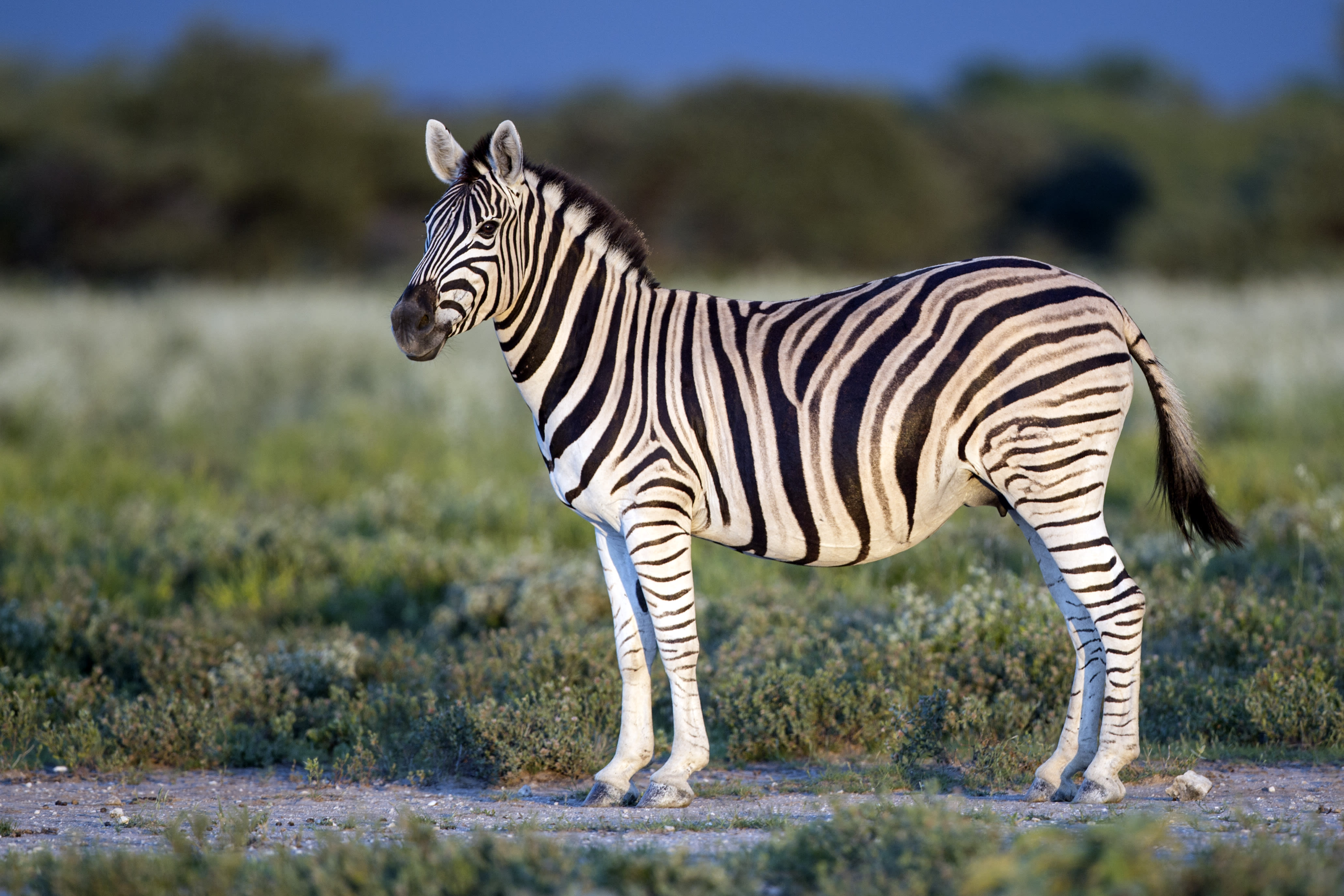
Plains zebras primarily inhabit open grasslands, savannas, and lightly wooded areas across eastern and southern Africa, from Ethiopia to South Africa. They prefer regions with abundant grasses and access to water sources, avoiding dense forests or mountainous terrain. Their adaptability allows them to thrive in both arid and semi-arid environments.
Diet
Plains zebras are herbivores that primarily consume grasses, with occasional supplements of leaves, bark, and herbs. They are grazers that feed mainly during the cooler parts of the day, such as early morning and late afternoon, to avoid midday heat and conserve energy. This feeding behavior supports their migratory patterns in search of fresh pastures.
Behavior
Plains zebras live in social herds consisting of a dominant stallion, several mares, and their offspring, with larger groups forming during migrations. They are diurnal animals, active during the day for grazing and resting at night, and exhibit territorial behavior where stallions defend their harem from rivals. Notable behaviors include mutual grooming to strengthen bonds and forming protective circles when threatened by predators.
Hunting
Hunting Plains zebras is a regulated activity in select African regions, employing spot-and-stalk methods in open grasslands where hunters use binoculars to locate herds and approach with the wind in their favor, ensuring ethical shots for quick, humane harvests; blinds near water sources can also be effective during dry periods. Use a bolt-action rifle chambered in .30-06 Springfield or larger calibers like .300 Winchester Magnum with premium expanding bullets for deep penetration and vital organ damage, always prioritizing shot placement behind the shoulder for a clean kill. The best seasons run from June to October in southern Africa, coinciding with dry months when zebras gather at waterholes, improving visibility and opportunities; trophy criteria focus on mature males with impressive manes and unique stripe patterns, with records tracked by Safari Club International based on skull measurements and hide quality. Legal hunting is available in countries such as South Africa, Namibia, Botswana, and Tanzania, primarily on private game ranches and conservancies where fees from hunts fund anti-poaching patrols and habitat restoration, demonstrating how regulated harvest programs sustain zebra populations and support broader wildlife conservation efforts in the region.
Conservation Status
The IUCN classifies the plains zebra as Near Threatened, with populations declining due to habitat loss from agriculture and poaching for meat and hides. Major threats include human-wildlife conflict and climate change impacts on their grassland habitats.