
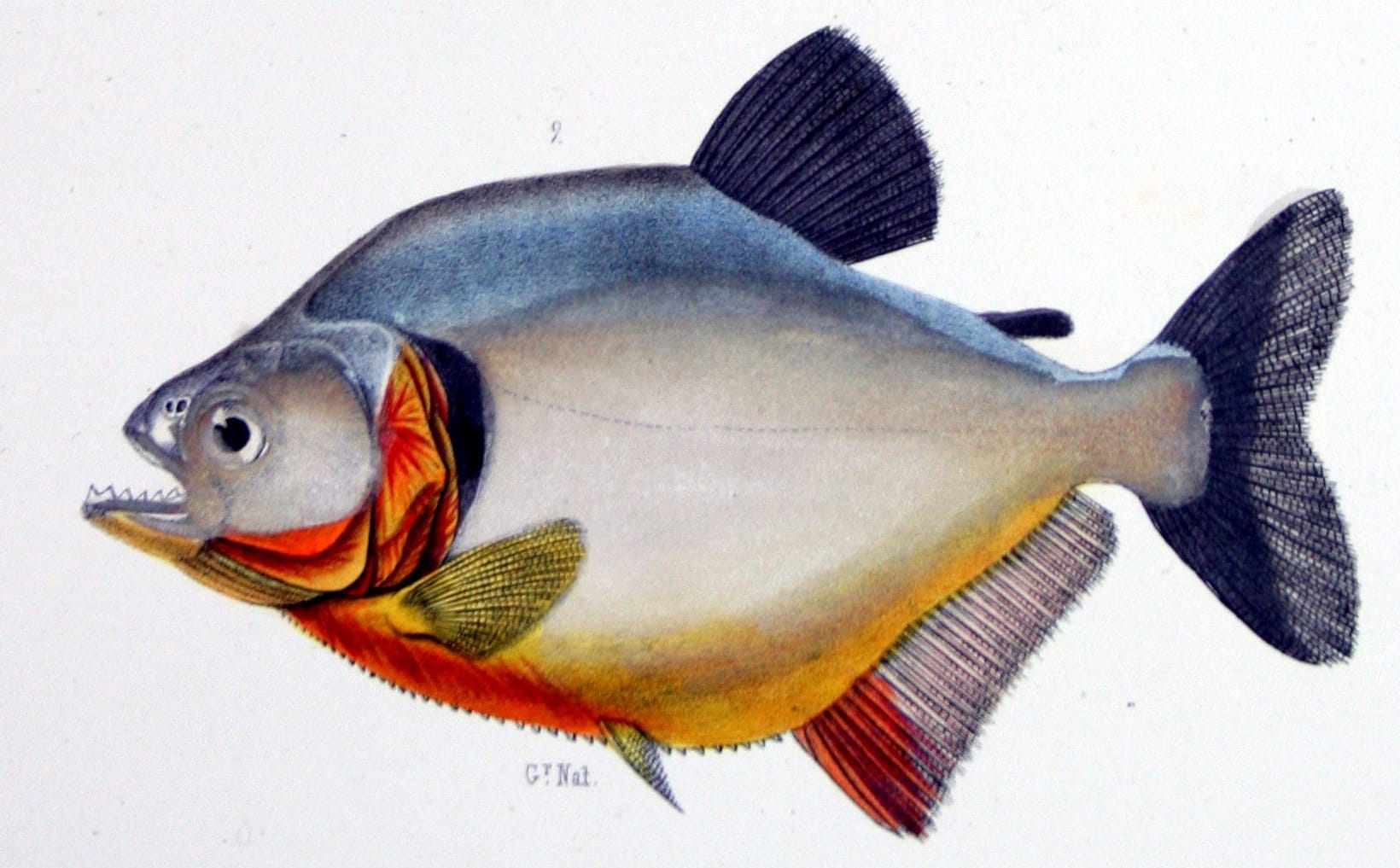
Taxonomy
- Kingdom
- Animalia
- Phylum
- Chordata
- Class
- Actinopterygii
- Order
- Siluriformes
- Family
- Serrasalmidae
- Genus
- Serrasalmus
- Species
- humeralis
Habitat
This species inhabits freshwater rivers, streams, and flooded forests in the Amazon River Basin, preferring warm, slow-moving waters with abundant vegetation for cover. It is commonly found in Brazil's Iriri and Amazon Rivers, avoiding fast currents and opting for areas with plenty of hiding spots among roots and submerged logs.
Diet
Pirambeba primarily feeds on smaller fish, insects, and crustaceans, using its sharp teeth to ambush prey in schools. It exhibits opportunistic feeding behavior, often becoming more active during dawn and dusk when visibility is low, and can engage in feeding frenzies if blood is detected in the water.
Behavior
Pirambeba is a schooling fish that forms groups for protection and hunting, making it highly social and coordinated in its movements. It is diurnal, actively foraging during the day, and can be territorial around feeding areas, quickly attacking perceived threats. These fish are known for their aggressive responses to disturbances, which has led to their reputation as formidable predators.
Fishing
Targeting the Pirambeba (Serrasalmus humeralis) in Brazil's Iriri and Amazon River Basin offers exciting sport fishing opportunities, supporting conservation through angler-funded programs that protect these vital waterways. Use aggressive techniques like casting with cut bait or live bait to mimic their natural prey, or troll slowly through vegetated areas for effective strikes; jigging with metal spoons can also provoke their territorial responses. Opt for light to medium spinning tackle with 10-20 lb test line, strong wire leaders to guard against their sharp teeth, and size 2-6 hooks baited with chunks of fish, shrimp, or insects to entice their opportunistic feeding. The best season aligns with the rainy months from November to March when they're more active during breeding, targeting dawn and dusk for peak bites in low-visibility conditions. Focus on warm, slow-moving waters with abundant vegetation, submerged logs, and flooded forests in the Amazon River for the highest success, avoiding fast currents where they rarely venture. Pirambeba typically reach up to 40 cm and 5 lbs, with no official IGFA records, but landing a sizable one underscores the thrill of this species. Conservation-wise, while Pirambeba is not evaluated by the IUCN and populations are stable, practicing catch-and-release helps maintain healthy stocks, contributing to broader efforts like habitat restoration in the Amazon Basin funded by fishing licenses.
Conservation Status
Listed as Not Evaluated by IUCN.