
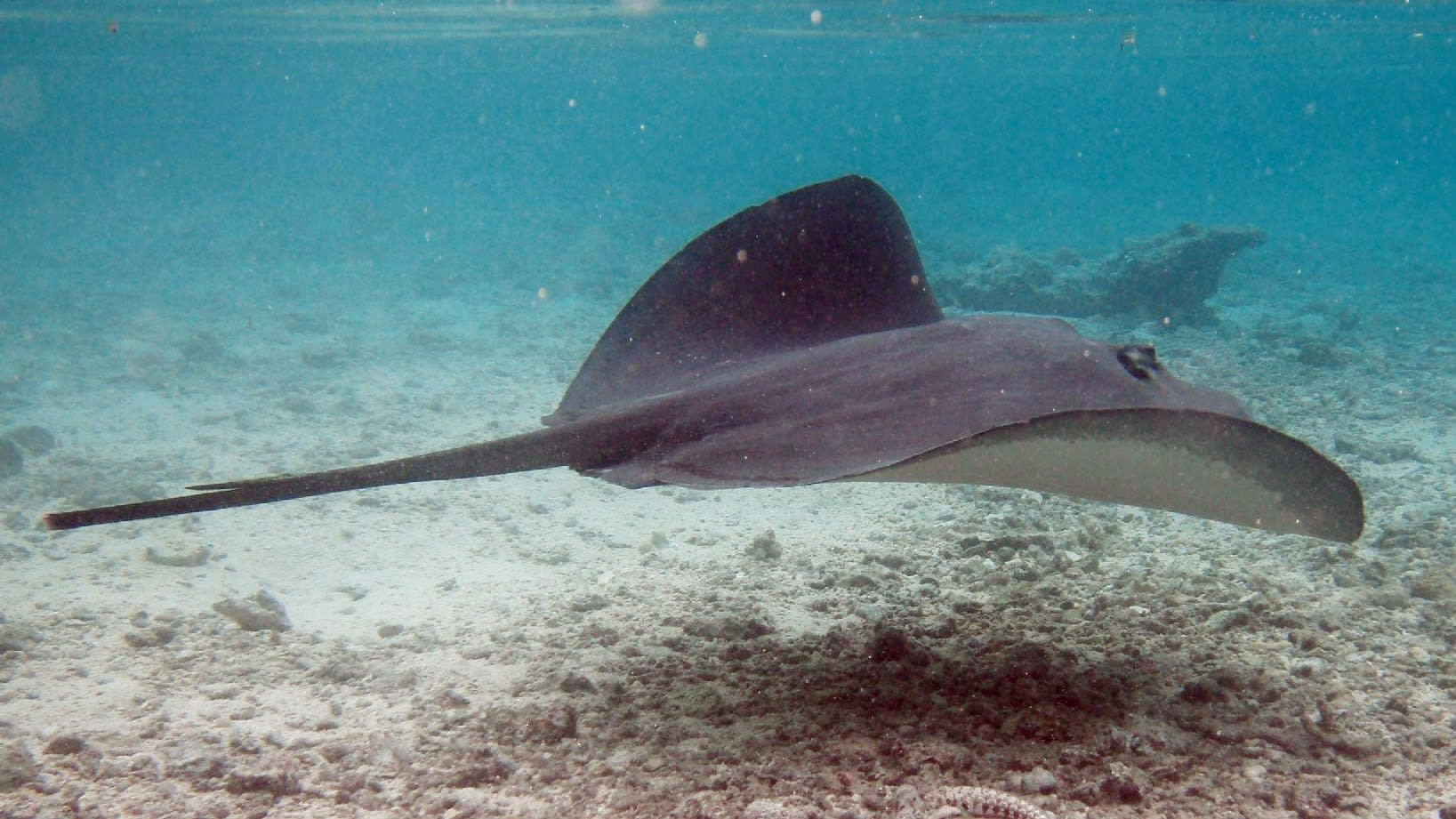
Taxonomy
- Kingdom
- Animalia
- Phylum
- Chordata
- Class
- Chondrichthyes
- Order
- Myliobatiformes
- Family
- Dasyatidae
- Genus
- Himantura
- Species
- fai
Habitat
Pink whiprays inhabit shallow coastal waters, estuaries, and coral reefs in the Indo-Pacific region. They prefer sandy or muddy substrates where they can bury themselves partially for protection. These areas are often near shorelines or in lagoons with warm tropical waters.
Diet
Pink whiprays primarily feed on benthic invertebrates such as crabs, shrimp, and mollusks. They use their disc to stir up the sediment and uncover prey, employing a suction feeding method. Feeding activity peaks at night when they are most active.
Behavior
Pink whiprays are generally solitary and nocturnal, spending daylight hours buried in sand to avoid detection. They exhibit defensive behaviors like rapid swimming or tail lashing when threatened, and they are not strongly territorial but may return to favored feeding areas. During mating seasons, they may interact more frequently with others of their species.
Conservation Status
Listed as Vulnerable by IUCN.