
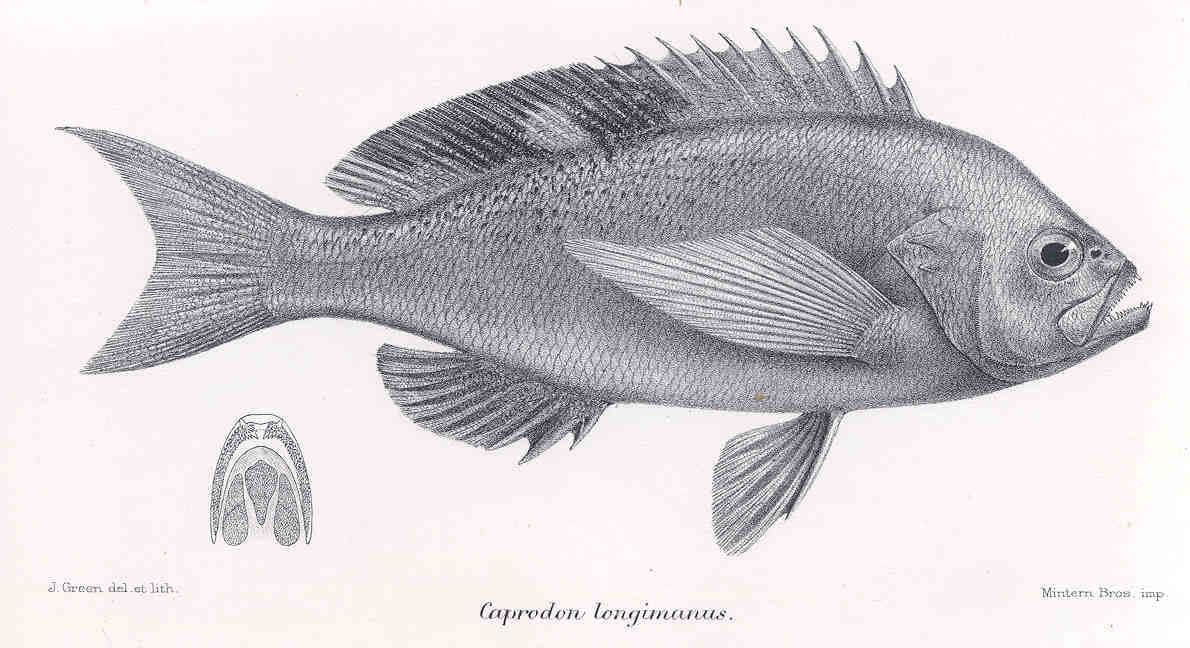
Taxonomy
- Kingdom
- Animalia
- Phylum
- Chordata
- Class
- Actinopterygii
- Order
- Perciformes
- Family
- Kyphosidae
- Genus
- Caprodon
- Species
- longimanus
Habitat
Pink maomao inhabit rocky and coral reefs, typically at depths of 10 to 200 meters in the Indo-Pacific region. They prefer areas with strong currents and abundant cover, such as around islands and ridges in the Indian and Pacific Oceans. These habitats provide shelter and food sources in subtropical to tropical waters.
Diet
Pink maomao primarily feed on small crustaceans, mollusks, and algae, which they graze from rocks and coral. They exhibit diurnal feeding behavior, actively foraging in schools during the day. Their diet helps maintain reef ecosystems by controlling invertebrate populations.
Behavior
Pink maomao are schooling fish that form loose groups around reefs for protection and feeding. They are diurnal, active during the day and resting in crevices at night, and display territorial behavior when defending feeding sites. These fish are generally cautious, quickly darting into cover when threatened.
Fishing
Target pink maomao, a popular reef species in the Indo-Pacific, with bottom fishing techniques using light tackle for an exciting catch that supports conservation through angler-funded programs; use a medium-action rod with 10-20 lb test line, paired with a reel that handles depths up to 200 meters, and opt for bait like small crustaceans, mollusks, or worms, or lures such as jigs and soft plastics that mimic their natural diet for effective strikes. The best season is summer in tropical regions when they are more active and spawning, with peak fishing times during the day when they feed in schools; focus on rocky and coral reefs with strong currents around islands like New Zealand, Australia, or the Hawaiian Islands, dropping lines near structures at 10-200 meters for the best results. Pink maomao typically reach up to 50 cm and 2 lbs 3 oz, with no official IGFA record, but aiming for larger individuals promotes sustainable practices. Conservation efforts, including catch-and-release and slot limits in some areas, ensure healthy populations, as angler fees fund habitat protection in these vibrant ecosystems, making every trip a step toward preserving Indo-Pacific reefs.
Conservation Status
Listed as Least Concern by IUCN.