
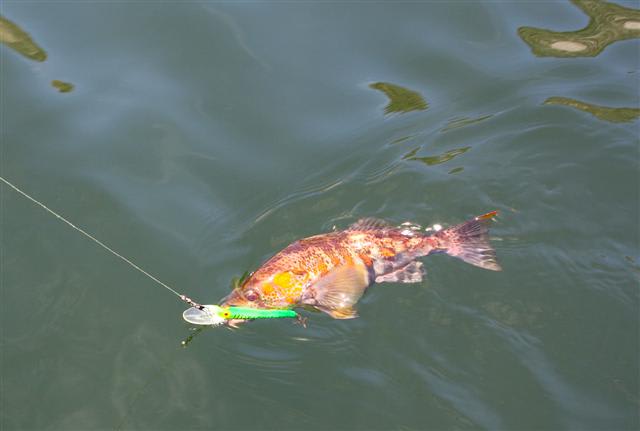
Taxonomy
- Kingdom
- Animalia
- Phylum
- Chordata
- Class
- Actinopterygii
- Order
- Scorpaeniformes
- Family
- Serranidae
- Genus
- Paralabrax
- Species
- humeralis
Habitat
This species inhabits rocky reefs and coastal waters in the southeastern Pacific Ocean, primarily from Peru to Chile. It prefers depths of 10 to 50 meters, often found near structures like boulders and coral formations that provide shelter.
Diet
The Peruvian rock seabass primarily feeds on small fish, crustaceans such as crabs and shrimp, and mollusks like snails. It is an ambush predator, hunting during daylight hours in rocky areas where prey is abundant.
Behavior
Peruvian rock seabass are generally solitary or form small groups, exhibiting territorial behavior around their reef habitats to defend feeding areas. They are diurnal, most active during the day for hunting and less active at night when they seek shelter in crevices. This species is known for its cautious approach, often hiding among rocks to avoid threats.
Fishing
As a popular target for recreational anglers in the southeastern Pacific Ocean, particularly along the coasts of Peru, Chile, Colombia, and Ecuador, the Peruvian rock seabass offers exciting sport fishing opportunities that support conservation through license fees and habitat protection programs. Target this ambush predator using bottom fishing or jigging techniques around rocky reefs and structures in depths of 10 to 50 meters, where they hide and hunt; cast lures that mimic small fish, shrimp, or crabs, or use live bait like crustaceans for the best results. Opt for medium-light tackle with a sturdy rod (7-9 feet), a reel spooled with 10-20 pound test line, and hooks sized 1/0 to 2/0 to handle their powerful strikes without damaging fragile habitats. The best season aligns with their spawning period from November to March in the southern hemisphere, with peak activity during daylight hours when they are most aggressive; focus on early morning or late afternoon for higher catch rates. Anglers should target areas with boulders and coral formations off places like Bujama Mala in Peru, ensuring to follow local regulations as effective management tools—the species is listed as Data Deficient by IUCN, so practices like catch-and-release and adhering to slot limits where applicable help maintain healthy populations and contribute to angler-funded waterway protection. The largest recorded Peruvian rock seabass reaches up to 60 cm and 3 pounds, with no specific IGFA records, emphasizing the importance of sustainable angling to preserve these fish for future generations.
Conservation Status
Listed as Data Deficient by IUCN.