
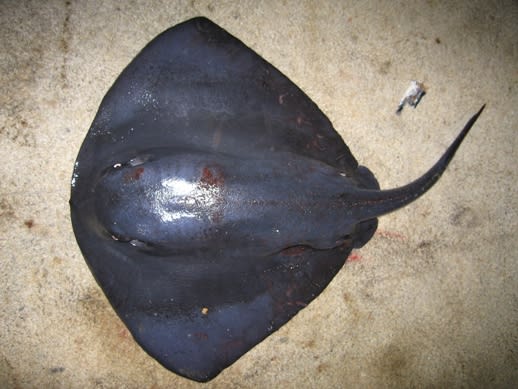
Taxonomy
- Kingdom
- Animalia
- Phylum
- Chordata
- Class
- Chondrichthyes
- Order
- Myliobatiformes
- Family
- Dasyatidae
- Genus
- Dasyatis
- Species
- violacea
Habitat
Pelagic stingrays inhabit open ocean waters, particularly over continental shelves and slopes in tropical and subtropical regions, at depths ranging from 10 to 800 meters. They are often found in the Atlantic, Indian, and Pacific Oceans, preferring areas with sandy or muddy substrates for resting. Their pelagic nature means they can migrate widely based on water temperature and food availability.
Diet
Pelagic stingrays primarily feed on bottom-dwelling invertebrates such as crustaceans, mollusks, and polychaete worms, which they locate by foraging along the ocean floor. They also consume small fish and squid, using their powerful jaws to crush hard-shelled prey. Feeding activity peaks at night when they are most active in hunting.
Behavior
Pelagic stingrays are mostly solitary but may form loose groups in areas with abundant food. They are nocturnal feeders, spending the day resting on the seafloor and becoming active at night to hunt. They exhibit territorial behavior around feeding grounds and can deliver a defensive sting if threatened.
Conservation Status
Listed as Least Concern by IUCN.