
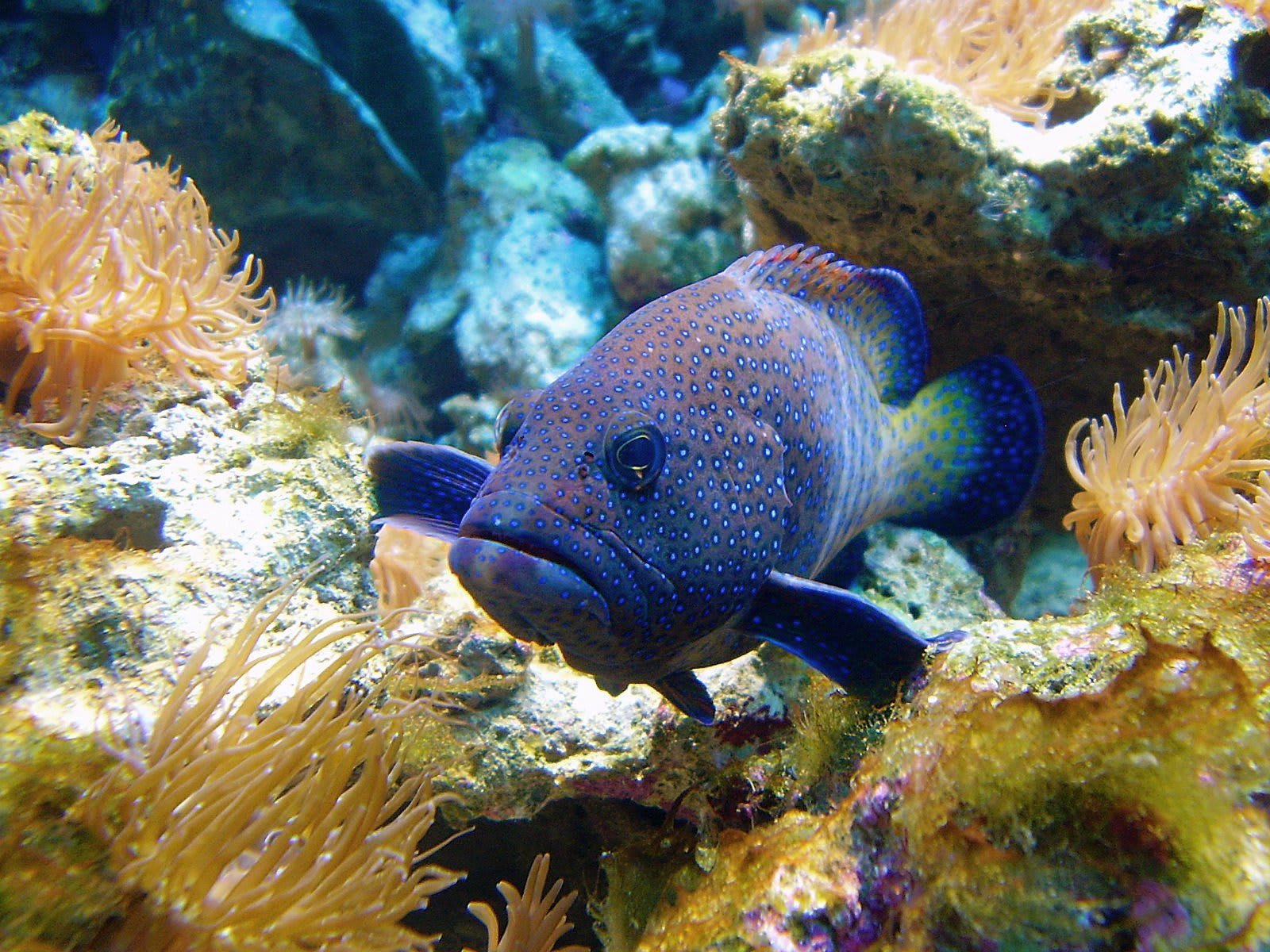
Taxonomy
- Kingdom
- Animalia
- Phylum
- Chordata
- Class
- Actinopterygii
- Order
- Scorpaeniformes
- Family
- Serranidae
- Genus
- Cephalopholis
- Species
- argus
Habitat
Peacock hinds primarily inhabit coral reefs, lagoons, and rocky areas in tropical marine environments. They prefer depths of 2 to 40 meters in the Indian and Pacific Oceans, often found around structures that provide hiding spots. This species avoids very shallow or turbid waters.
Diet
Peacock hinds are carnivorous predators that feed mainly on small fishes, crustaceans, and cephalopods. They employ an ambush strategy, hiding among corals and striking quickly at prey. Feeding activity peaks during the day in their reef habitats.
Behavior
Peacock hinds are typically solitary or form small groups, exhibiting territorial behavior by defending specific reef areas from intruders. They are diurnal, active during daylight hours for hunting and resting at night, and use color changes for camouflage and communication. This species is known for its cautious nature, often retreating into crevices when threatened.
Fishing
Targeting the Peacock hind, a prized grouper species in tropical marine waters, is a rewarding way to support conservation through regulated fishing that funds habitat protection and reef restoration programs via license fees and excise taxes. Use bottom fishing or jigging techniques with medium-light rods, reels spooled with 10-20 lb monofilament or braided line, and circle hooks sized 2/0 to 4/0 to minimize injury during catch-and-release; effective baits include live shrimp, small fish, or crabs, while lures like metal jigs and soft plastic swimbaits mimic their natural prey for enticing strikes. The best seasons are the warmer months from spring through fall when they spawn, with peak activity during daylight hours in clear waters; focus on coral reefs, lagoons, and rocky structures in depths of 2 to 40 meters across the Indian and Pacific Oceans, such as around Hawaii or the Seychelles, where casting near hiding spots like crevices yields the best results. The IGFA all-tackle world record stands at 7 pounds 10 ounces, caught in the Pacific, highlighting the thrill of this species. Conservation efforts, including slot limits and catch-and-release practices in areas like Hawaii, are effective management tools that maintain healthy populations and protect vital reef ecosystems, all bolstered by angler contributions to stocking and monitoring programs.
Conservation Status
Listed as Least Concern by IUCN.