
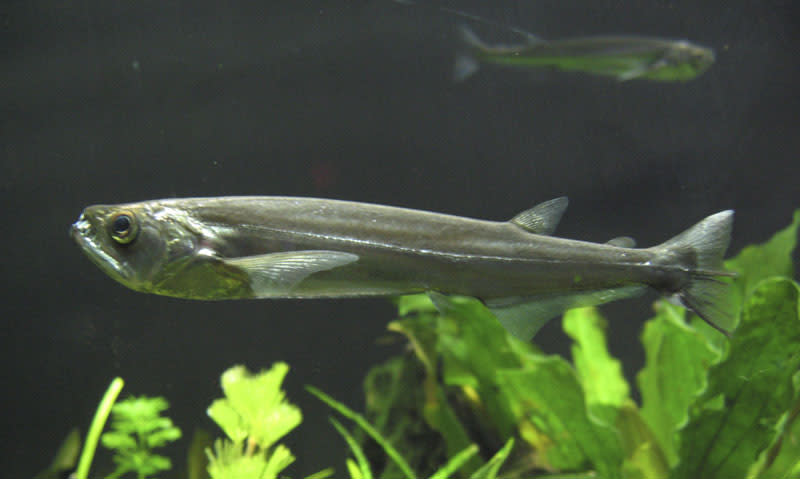
Overview
The outstanding characteristic of this fish is the pair of enormous saber like teeth protruding from the lower jaw of the broad upturned mouth. The upper jaw contains two corresponding holes to accommodate the four to six inch teeth when the mouth is closed. There elongated, compressed body and enlarged pectoral fins are ideal for the violently turbulent water that these topendpredators seem to prefer. They are generally dark blue to olivaceous dorsally, blending to silver along the sides and belly.
Taxonomy
- Kingdom
- Animalia
- Phylum
- Chordata
- Class
- Actinopterygii
- Order
- Labriformes
- Family
- Cynodontidae
- Genus
- Hydrolycus
- Species
- scomberoides
Habitat
Payara inhabit freshwater rivers and lakes in South America from the Orinoco to Paraguay River basins. The distribution of large payara is limited to a few places in Columbia, Venezuela, Brazil, Guyana, Peru and probably Ecuador. They prefer fast moving water, but are found in still waters of lakes and rivers as well.
Diet
Payara primarily feed on smaller fish such as characins, tetras, and other riverine species, using their long fangs to impale and swallow prey whole. They are ambush predators that hunt in fast-moving waters, typically during daylight hours when visibility is good. Feeding behavior involves rapid strikes from hiding spots near structures like rocks or submerged logs.
Behavior
Payara are among the gamest of South Americas freshwater fishes, leaping when hooked and making long fast runs. They are picivorous predators that attack upward, stabbing prey with the large canine teeth and then swallowing them whole and head first.
Fishing
While not particularly tasty, local populations fish for them and eat them regularly. Though plentiful now, the distribution of payara is limited, and anglers must be cautious to preserve this fantastic fishery; taking care to releasing fish in good condition.
Conservation Status
Listed as Not Evaluated by IUCN.