
Overview
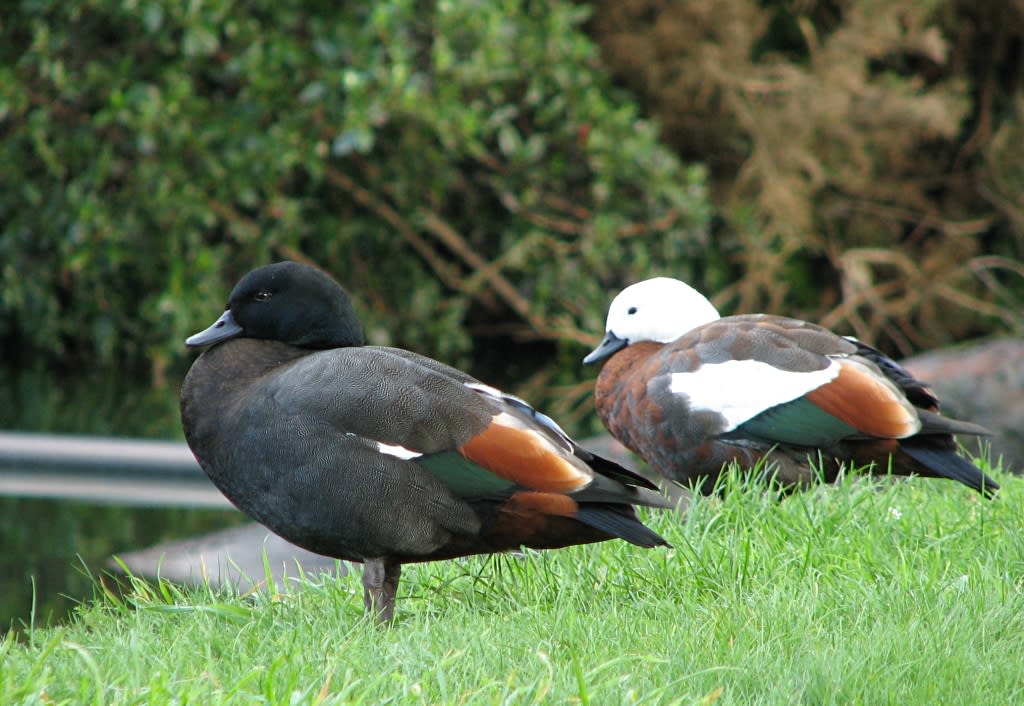
Both the male and female have striking plumage: the male has a black head and barred black body, the female a white head with a chestnut body.
Taxonomy
- Kingdom
- Animalia
- Phylum
- Chordata
- Class
- Bird
- Family
- Anatidae
- Genus
- Tadorna
- Species
- variegata
Habitat
Areas with ponds and ample pastures for grazing.
Diet
Grazes on grass and weeds, and will raid crops, particularly when molting.
Behavior
Paradise shelducks form long-term pair bonds, often lasting for life, and defend territories. They have a long breeding season, lasting from August through December. They reach sexual maturity after two years, and build nests lined with grass and feathers hidden in high grass, inside hollow trees, on branches of habitable trees (i.e. Macrocarpa), or beneath rotting logs. The mean clutch size is around nine eggs. Chicks fledge after eight weeks.
Hunting
Paradise shelducks were uncommon prior to European settlement, however changes to habitat caused by the conversion of forest to pasture, and the deliberate provisioning on ponds by hunting groups, has led to a large increase in the numbers of these ducks.
Conservation Status
Listed as Least Concern by IUCN.