
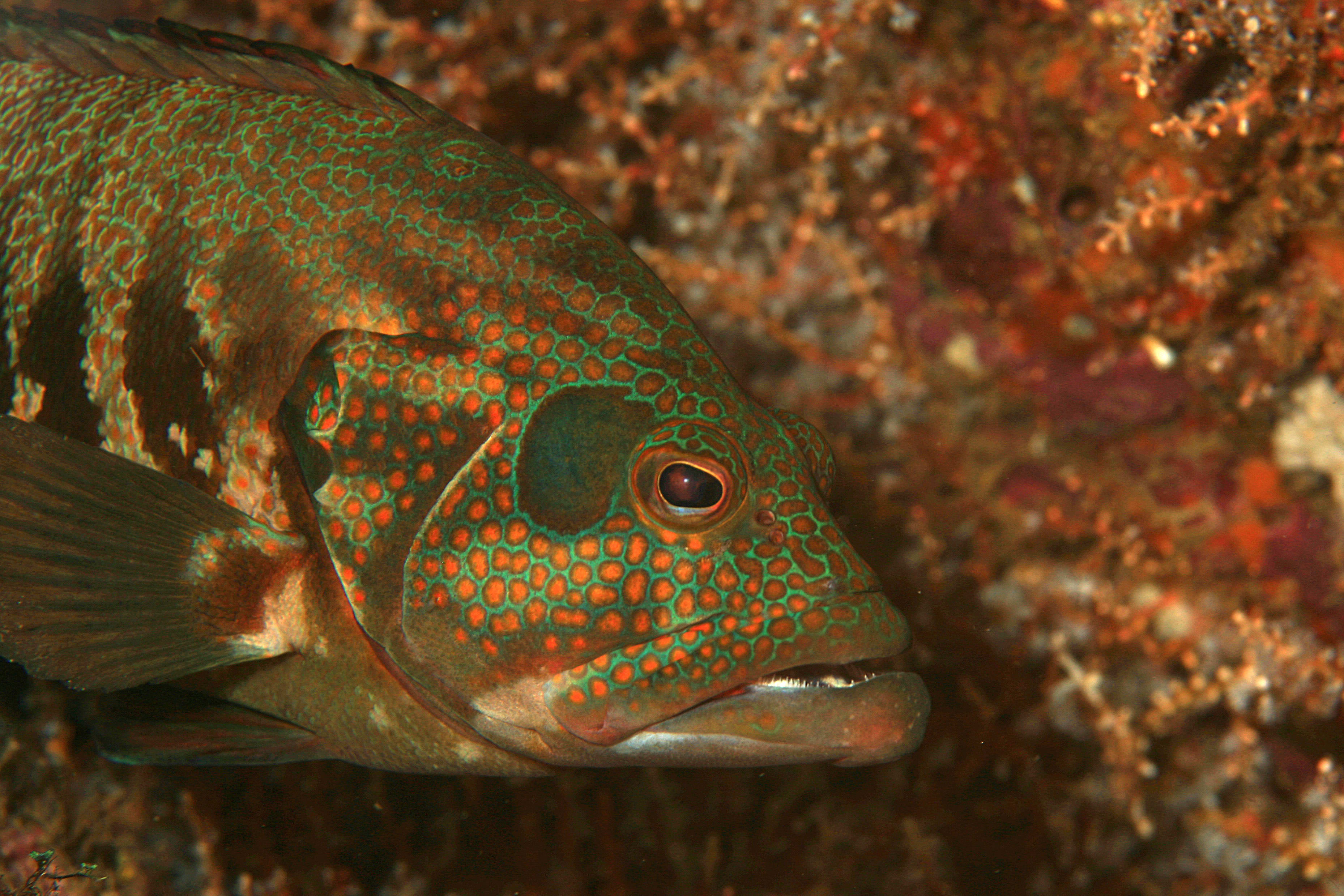
Taxonomy
- Kingdom
- Animalia
- Phylum
- Chordata
- Class
- Actinopterygii
- Order
- Scorpaeniformes
- Family
- Serranidae
- Genus
- Cephalopholis
- Species
- panamensis
Habitat
This species inhabits rocky and coral reefs, as well as areas with abundant crevices for hiding, typically at depths of 5 to 50 meters. It is found in the Eastern Pacific Ocean, from the Gulf of California south to Peru, including coastal waters and islands like the Galápagos.
Diet
The Panama graysby primarily feeds on small fishes, crustaceans, and occasionally octopuses, using ambush tactics from concealed positions. It hunts during dawn and dusk when prey is more active, relying on its excellent camouflage to surprise victims.
Behavior
Panama graysby are solitary and territorial fish that defend their hiding spots in reefs aggressively. They are primarily nocturnal or crepuscular, spending the day hidden in crevices and emerging to hunt at low light. This species exhibits protogynous hermaphroditism, starting life as females and changing to males under certain conditions.
Fishing
Target the Panama graysby, a prized reef fish in the Eastern Pacific from the Gulf of California to Peru, including hotspots like Costa Rica's Golfo Dulce and the Galápagos Islands, by focusing on rocky and coral reefs at depths of 5 to 50 meters where they hide in crevices; use bottom fishing or jigging techniques with a medium-heavy rod, a reel spooled with 20-30 pound test line, and sturdy hooks to handle their ambush behavior. Opt for live bait such as small fish or crustaceans, or effective lures that mimic these prey to entice strikes during dawn and dusk when they are most active. The best season runs from April to October during warmer months when spawning occurs, aligning with peak activity and supporting sustainable angling practices. Adults typically reach 30-50 cm and up to 2 pounds, with no specific IGFA record noted, but always aim to respect size limits to maintain healthy populations. As a Least Concern species per IUCN, Panama graysby benefit from angler-funded conservation efforts like license fees that support habitat restoration and stocking programs, emphasizing catch-and-release for smaller fish to ensure population stability and promote regulated fishing as a key tool in protecting these vibrant reef ecosystems.
Conservation Status
Listed as Least Concern by IUCN.