
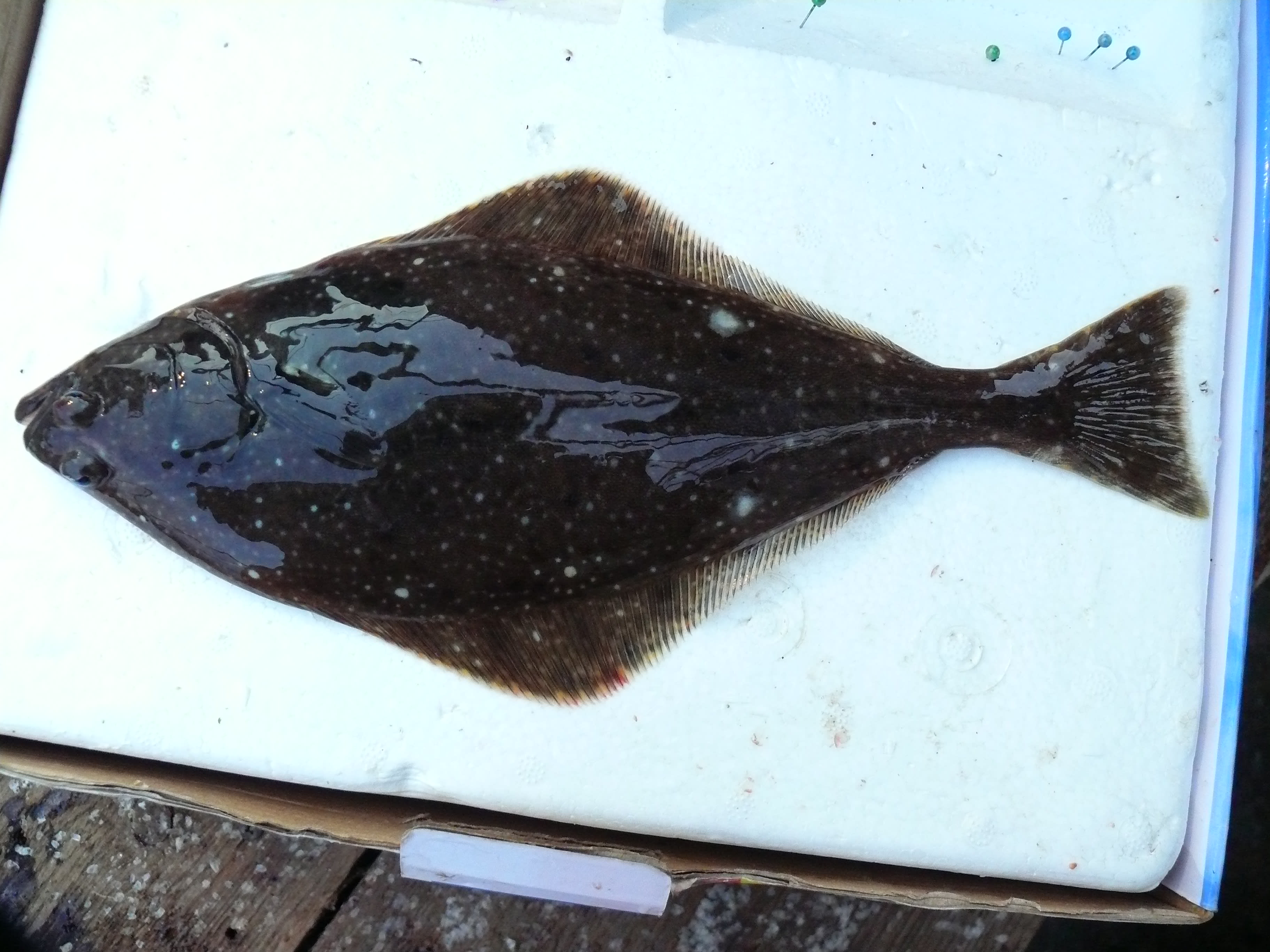
Taxonomy
- Kingdom
- Animalia
- Phylum
- Chordata
- Class
- Actinopterygii
- Order
- Perciformes
- Family
- Pleuronectidae
- Genus
- Hippoglossus
- Species
- stenolepis
Habitat
Pacific halibut inhabit the continental shelves of the North Pacific Ocean, from the cold waters off Alaska and the Bering Sea down to California and northern Japan. They prefer sandy or muddy bottoms at depths ranging from 50 to 2,000 meters, often in areas with strong currents and abundant prey.
Diet
Adult Pacific halibut primarily eat fish such as cod and pollock, as well as squid and crustaceans like crabs and shrimp. They are ambush predators that lie in wait on the seafloor, using their excellent camouflage to surprise prey, and they feed most actively during dawn and dusk.
Behavior
Pacific halibut are generally solitary fish that migrate seasonally, moving to shallower waters in summer for feeding and deeper waters in winter for spawning. They exhibit territorial behavior by burying themselves in sediment to ambush prey and are most active during the day, though they can be less predictable in varying conditions. Their strong swimming ability allows them to cover long distances in search of food.
Fishing
Anglers targeting Pacific halibut should use bottom fishing techniques, such as drifting or anchoring over deep-water structures, to effectively hook these ambush predators; employ a strong rod and reel setup with 80-200 pound test line, large circle hooks (size 8/0 to 12/0), and sufficient weights to keep bait on the seafloor, paired with baits like herring, squid, or artificial lures that mimic fish and crustaceans. Opt for heavy tackle to handle their powerful runs, including stout rods rated for big game and drag systems to tire out these large fish safely. The best season is summer when halibut migrate to shallower waters for feeding, with peak activity at dawn and dusk in areas like the continental shelves off Alaska, Washington, Oregon, and the Bering Sea, at depths of 50 to 600 meters over sandy or muddy bottoms—focus on strong current zones for higher success. The IGFA all-tackle world record is 459 pounds, caught in 1996 off the coast of Alaska, showcasing the species' impressive size potential. These fisheries are managed through effective tools like annual catch limits and size regulations by the International Pacific Halibut Commission, which are funded by angler license fees and excise taxes, supporting conservation efforts such as stock assessments and habitat protection to maintain healthy populations and promote sustainable recreational fishing as a key contributor to aquatic conservation.
Conservation Status
Listed as Not Evaluated by IUCN.