
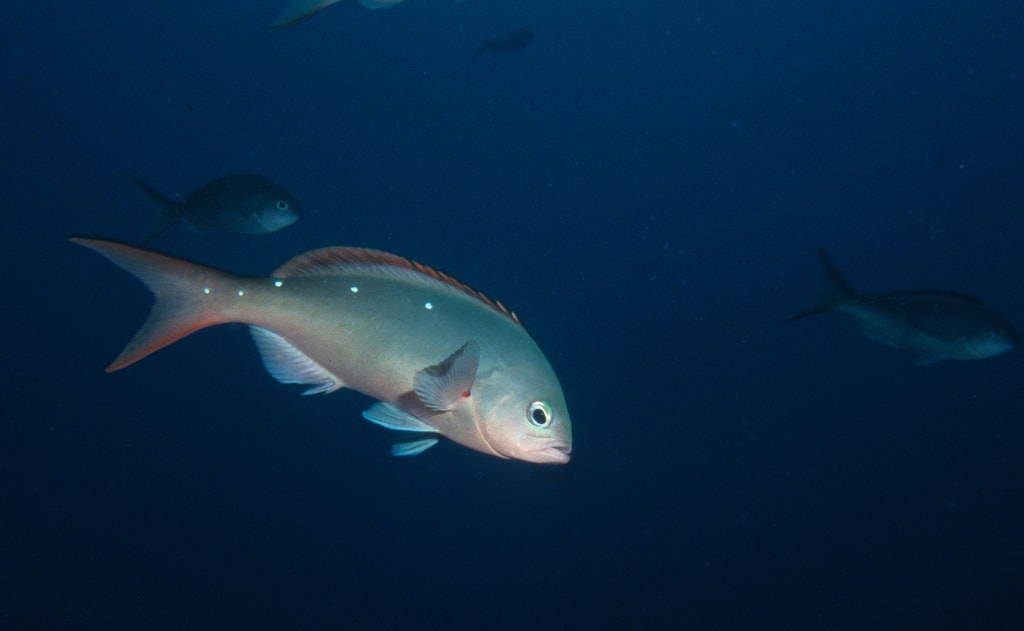
Taxonomy
- Kingdom
- Animalia
- Phylum
- Chordata
- Class
- Actinopterygii
- Order
- Scorpaeniformes
- Family
- Serranidae
- Genus
- Paranthias
- Species
- colonus
Habitat
Pacific creolefish primarily inhabit coral reefs and rocky areas in the Eastern Central Pacific Ocean, from the Gulf of California to the Galápagos Islands. They prefer depths of 10 to 100 meters, often in areas with strong currents and abundant cover. These environments provide shelter and abundant food sources.
Diet
Pacific creolefish feed mainly on small fishes, crustaceans, and planktonic organisms. They hunt in schools during the day, using coordinated movements to corral prey in the water column. Feeding activity peaks in the morning and late afternoon.
Behavior
Pacific creolefish are highly social, forming large schools that enhance protection from predators and improve foraging efficiency. They are diurnal, active during the day for feeding and resting in sheltered areas at night. Schooling behavior helps them navigate currents and avoid territorial conflicts.
Fishing
Targeting Pacific creole fish in the Eastern Central Pacific, such as around the Galápagos Islands, Gulf of California, or Cocos Islands, involves effective bottom fishing or jigging techniques in coral reefs and rocky areas at depths of 10 to 100 meters, where strong currents provide cover and food sources. Use light to medium tackle for the best results, including a 7-foot rod with a sensitive tip, a reel spooled with 10-20 lb monofilament line, and size 1/0 to 2/0 hooks to handle their schooling behavior and avoid snags on reefs; effective baits and lures include live crustaceans, small fish imitations, or vertical jigs that mimic their prey like planktonic organisms, cast near structures to entice strikes during their active feeding periods. The best season is year-round in tropical waters, with peak activity in warmer months and optimal times being early morning or late afternoon when they school and hunt; focus on areas with abundant cover to increase your catch rate while practicing catch-and-release to support conservation efforts. Record sizes include individuals up to 35 cm (about 14 inches) and weights to 1 lb 6 oz, with no specific IGFA all-tackle record noted, highlighting the species' modest size but exciting challenge for anglers. As a Least Concern species with a stable population, regulations like slot limits in some regions serve as effective management tools to maintain healthy stocks, and angler-funded programs through license fees contribute to habitat protection and stocking initiatives in the Pacific, ensuring sustainable fishing as a key conservation strategy.
Conservation Status
Listed as Least Concern by IUCN.