
Overview
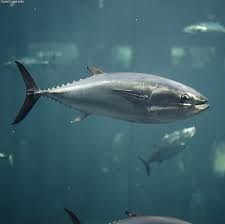
Worldwide there are three species of bluefin tuna. Two of the species, the Pacific and southern bluefin were thought to be a subspecies of Atlantic bluefin (Thunnus thynnus) because of their similar appearance. Scientists also thought that Pacific bluefin were restricted to the northern hemisphere, but the old adage that the ocean has no fences appears to be true as there are more and more substantiated reports of Pacific bluefin making deep forays down under. In fact, the new millennium has seen impressive runs of Pacific bluefin off of New Zealand, and several All-Tackle records have been caught there recently, including the current record of 716 lb 8 oz. Oftentimes Pacific bluefin tuna may be distinguished from southern bluefin by the dark color of their caudal keels at the base of the tail. Southern bluefin tuna generally have a yellow or yellowish coloration on the caudal keel, but this may not be a 100% accurate means of differentiating between species. Because Pacific bluefin may be difficult to distinguish from southern bluefin, IGFA will require that a genetic analysis accompany the application for any Pacific bluefin caught in the southern hemisphere that weighs less than the current southern bluefin All-Tackle record of 348 lb.
Taxonomy
- Kingdom
- Animalia
- Phylum
- Chordata
- Class
- Actinopterygii
- Order
- Pleuronectiformes
- Family
- Scombridae
- Genus
- Thunnus
- Species
- orientalis
Habitat
Pacific bluefin tuna inhabit open ocean waters, primarily in the temperate and subtropical regions of the North Pacific Ocean, including areas near Japan, the western coast of North America, and migratory routes across the Pacific. They prefer depths from the surface to several hundred meters and are often found in areas with strong currents and abundant prey. These fish are highly migratory, traveling long distances between feeding and spawning grounds.
Diet
Pacific bluefin tuna primarily feed on small fish such as anchovies, sardines, and mackerel, as well as squid and crustaceans. They are active predators that hunt in schools, using their speed and agility to chase down prey in open water. Feeding typically occurs during the day when visibility is high.
Behavior
Pacific bluefin tuna are highly social and form large schools, particularly during migration and feeding, which helps in predator avoidance and cooperative hunting. They are fast swimmers, reaching speeds up to 40 mph, and exhibit long-distance migrations following ocean currents and temperature changes. These fish are not territorial but show bursts of activity during feeding or when evading threats.
Fishing
Pacific bluefin tuna are a highly sought-after sport fish in the open ocean waters of the North Pacific, where recreational fishing plays a key role in conservation by generating funds through license fees and excise taxes that support habitat restoration and population monitoring programs. Employ trolling with heavy-duty tackle, including 50-80 lb test monofilament or braided lines, robust big-game rods (such as those rated for 50-130 lb class), and high-capacity reels with strong drag systems to handle their powerful runs; use live baits like mackerel, sardines, or squid, or effective lures such as skirted trolling plugs and cedar plugs to mimic their prey. The best season is spring through summer, particularly April to August in the western Pacific near Japan, with peak activity at dawn and dusk when they actively hunt schools of small fish in areas with strong currents and migratory routes off the coasts of Japan, the western US, and across the Pacific; focus on surface to several hundred meters depths for the best encounters. The IGFA all-tackle world record is 716 pounds 8 ounces, caught off New Zealand, highlighting their impressive size potential. Due to their vulnerable status as listed by the IUCN, follow effective management tools like international quotas, size limits, and catch-and-release practices in certain areas, which help sustain populations and are bolstered by angler contributions to conservation efforts that protect these migratory species and their habitats.
Conservation Status
Listed as Vulnerable by IUCN.