
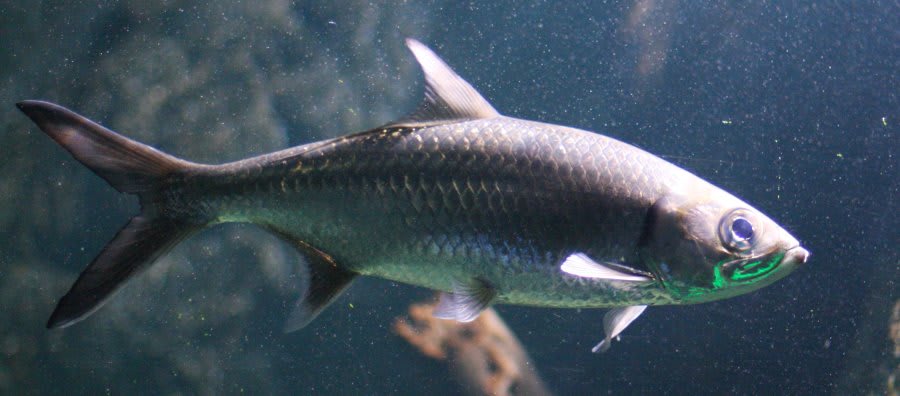
Taxonomy
- Kingdom
- Animalia
- Phylum
- Chordata
- Class
- Actinopterygii
- Order
- Perciformes
- Family
- Megalopidae
- Genus
- Megalops
- Species
- cyprinoides
Habitat
Oxeye tarpon primarily inhabit coastal waters, estuaries, and mangrove swamps in tropical and subtropical regions. They prefer shallow, warm waters with structures like reefs and vegetation for shelter. Their range spans the Indo-Pacific oceans, including areas like the Red Sea and Society Islands.
Diet
Oxeye tarpon feed mainly on small fish, crustaceans, and insects, often ambushing prey in schools. They exhibit opportunistic feeding behavior, primarily at dawn and dusk in shallow waters. This makes them active hunters in their estuarine environments.
Behavior
Oxeye tarpon are schooling fish that form groups for feeding and protection, often migrating to follow food sources. They are most active during low-light periods like dawn and dusk and are known for their acrobatic leaps when threatened or hooked. This behavior helps them evade predators and hunt effectively in shallow waters.
Fishing
Anglers prize Oxeye tarpon for their explosive strikes and acrobatic jumps, making them a top sport fish that bolsters aquatic conservation through license fees and excise taxes funding habitat restoration in tropical regions. Employ light tackle setups with 6-10 lb test monofilament line, 7-9 foot medium-action rods, and reels with strong drags to manage their leaps; effective baits include live shrimp, small fish, or crabs, while lures like silver spoons, jigs, or topwater plugs excel at imitating their prey in shallow waters. Best techniques involve casting from boats or shorelines with a steady retrieve to trigger ambushes, focusing on areas with structure for added success. Target them during warmer months in tropical and subtropical zones, with peak activity at dawn and dusk when they actively hunt schools of small fish and crustaceans; prime habitats include coastal estuaries, mangrove swamps, and reefs across the Indo-Pacific oceans, such as the Red Sea, Society Islands, and South Africa. Specimens can reach up to 6 pounds 9 ounces and lengths of 30-65 cm, with IGFA all-tackle records highlighting their fighting prowess—check local records for specifics. Conservation efforts, including catch-and-release practices, help maintain stable populations as Oxeye tarpon are listed as Data Deficient by IUCN, and angler-funded programs protect these vital waterways, ensuring sustainable fishing opportunities.
Conservation Status
Listed as Data Deficient by IUCN.