
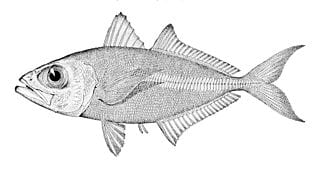
Taxonomy
- Kingdom
- Animalia
- Phylum
- Chordata
- Class
- Actinopterygii
- Order
- Cichliformes
- Family
- Carangidae
- Genus
- Selar
- Species
- boops
Habitat
Oxeye scad inhabit tropical and subtropical coastal waters of the Indo-Pacific, often in pelagic environments over continental shelves and near reefs. They prefer depths from 10 to 200 meters and are commonly found in schools around islands or along drop-offs. This species avoids very shallow or extremely deep waters.
Diet
Oxeye scad primarily feed on small fish, shrimp, and zooplankton, which they capture in open water. They exhibit schooling behavior to hunt efficiently, often chasing prey in coordinated groups. Feeding activity peaks during the day when visibility is high.
Behavior
Oxeye scad are highly schooling fish, forming large groups for protection against predators and to enhance foraging efficiency. They are diurnal, most active during the day for feeding and less so at night. These fish exhibit migratory patterns following food sources and can be territorial when spawning.
Fishing
Oxeye scad are a favored target for recreational anglers in the Indo-Pacific regions, such as the Indian Ocean, Western Central Pacific, and around islands like Kiribati and Australia, where fishing supports conservation through license fees that fund habitat restoration and protect marine ecosystems. Best techniques involve trolling with small lures or live bait to mimic their prey like small fish and shrimp, or casting jigs and spoons into schooling groups for fast-paced action that promotes angler participation in sustainable practices. Use light spinning tackle with 6-10 lb test line, paired with size 4-6 hooks and short leaders to handle their agile fights in open water; effective baits and lures include live shrimp, fish strips, or shiny metal jigs that replicate zooplankton or small baitfish. The best seasons are year-round in tropical waters, with peak activity during daylight hours when they feed actively in schools. Target them in pelagic habitats over continental shelves and near reefs at depths of 10-200 meters, focusing on areas with surface signs like bird flocks or bait balls for the highest success. Record sizes reach up to 40 cm (16 inches) and 1 lb, with IGFA records for similar carangids highlighting the thrill of pursuing these speedy fish. As a species listed as Least Concern by the IUCN, oxeye scad benefit from effective management tools like catch-and-release and slot limits in some areas, ensuring stable populations and demonstrating how regulated fishing contributes to conservation efforts.
Conservation Status
Listed as Least Concern by IUCN.