
Overview
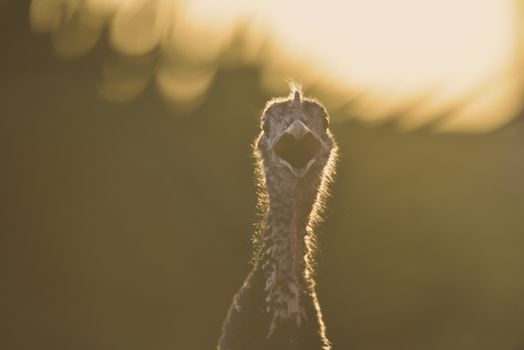
The Osceola is the smallest wild turkey in the U.S., with the juvenile, known as a jake, weighing in at 15-20 lbs.. The mature male, known as a tom or a gobbler, will be as much as 3.5 feet tall and can weigh as much as 20 lbs.. The mature female, known as a hen, can also reach a height of 3.5 feet, but is generally much lighter, weighing in at a mere 8-14 lbs..The Osceola wild turkey looks very much like their larger cousins, the eastern wild turkey (which also lives on the Florida panhandle and throughout much of North America), but they have more black and less white in the barring of their flight feathers and secondary wing feathers. They also have more iridescent green and red in their feathers than the eastern wild turkey, which tends to have more bronze in their feathers. The Osceola turkey also has long and darker tail feathers.The Osceola wild turkey shares other characteristics with its larger northern cousin. The male’s head is reddish in color and the female’s head is blue. In addition, the male has a number of red fleshy growths around the head, including the snood (above the bill), the caruncles (on the sides and front of the neck), and the dewlap (under the chin). In addition, all males and 10% of females have a beard that hangs from their chest and males have spurs on their lower legs.
Taxonomy
- Kingdom
- Animalia
- Phylum
- Chordata
- Class
- Bird
- Family
- Phasianidae
- Genus
- Meleagris
- Species
- Meleagris gallopavo
Habitat
The Osceola turkey is only found in Florida south of a line between Taylor and Dixie counties on the Gulf to a line between Nassau and Duval counties on the Atlantic. Birds north of that line are considered to be Eastern turkeys.
Diet
Similar to other turkeys, with the addition of amphibious prey.
Behavior
Wild turkeys generally move a mile or two in one day depending on habitat and distance to food and water sources. The annual home range of wild turkeys varies from 370 to 1,360 acres and contains a mixture of trees and grass cover. Just like humans, turkeys talk to communicate. Their vocabulary consists of 28 distinct calls. Each sound has a general meaning and can be used for different situations. Male turkeys are notorious for their iconic gobble, which unlike other calls, is given with a fixed intensity. Roosting in trees in an important element in the life of a wild turkey. It is a life-saving technique because roosting in trees helps birds avoid ground predators. Poults begin roosting from about 14-28 days old, depending on the sub-species, location and temperature. Turkeys may use traditional roost sites night after night but they generally use different sites and move from tree to tree. Turkeys usually select the largest trees available and roost as hight in them as they can comfortably perch. In fair weather, hardwood trees are favored, while hemlocks offer good protection from harsh elements. During the fall and winter seasons, it's common for turkeys to be in the good company of their equals. You'll see grouops of jakes, old and young hens and mature gobblers all sectioned out. The different flocks allow the birds to more easily determine dominance. In the spring, mating rituals begin. Wild turkeys dust, sun and preen from a young age, about 2-4 days old. Dusting is usually a flock activity. A dust bath is part of a bird's preening and plumage maintenance that keeps feathers in top condition. Turkeys will flap frantically in the dirt to spread dust over their entire body. Doing so keeps feathers from becoming greasy or matted. Sunning and preening often follow a dust bath as part of their extensive grooming regimen. Sunning birds recline on one side and extend the upward wing and leg to expose a large surface area to direct sunlight. Birds sun for several reasons: to obtain heat as a way of regulating their body temperature, maintain feather health, dislodge feather parasites and for relaxation. Preening is a common bird behavior to keep feathers in good shape. Birds preen to remove dust, dirt and parasites from their feathers. They also align each feather in the optimum position relative to adjacent feathers and body shape.
Hunting
Hunted across its range.
Conservation Status
Listed as Least Concern by IUCN.