
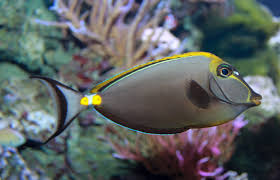
Taxonomy
- Kingdom
- Animalia
- Phylum
- Chordata
- Class
- Actinopterygii
- Order
- Anabantiformes
- Family
- Acanthuridae
- Genus
- Naso
- Species
- lituratus
Habitat
This species inhabits coral reefs, lagoons, and rocky areas in tropical marine environments. It prefers shallow to moderately deep waters, typically from 1 to 30 meters, across the Indo-Pacific region including areas around Hawaii and Australia. They are often found near areas with abundant algal growth for feeding.
Diet
The Orangespine unicornfish primarily feeds on benthic algae, seaweed, and occasionally small invertebrates scraped from rocks and coral. It grazes during the day in small groups or alone, using its beak-like mouth to browse reef surfaces. Feeding activity peaks in the morning and late afternoon when algae productivity is high.
Behavior
Orangespine unicornfish are typically solitary or form small loose groups, showing territorial behavior around feeding sites where they defend against intruders. They are diurnal, active during the day for foraging and resting in crevices at night. This species can exhibit aggressive displays, like flaring their spines, when threatened or competing for food.
Fishing
Target the Orangespine unicornfish, a popular species in tropical recreational fishing, using spearfishing or light tackle setups for an exciting challenge on coral reefs. Effective techniques include free diving with spears or casting with bottom rigs and jigs to mimic their algae-based diet, ensuring precise presentations in clear waters. Recommended tackle consists of a medium-light rod with 10-20 lb test line, paired with a reel that handles quick runs, and hooks sized 1/0 to 2/0 for small baits; use seaweed, algae-impregnated lures, or live baits like small crabs and shrimp to entice bites. The best season is during warmer months from spring to summer when spawning occurs, with peak activity in the morning and late afternoon for optimal feeding opportunities. Focus on coral reefs, lagoons, and rocky areas in shallow to moderate depths of 1-30 meters across the Indo-Pacific, such as Hawaii, Australia, and the Western Central Pacific, where they graze in small groups. Record sizes include individuals up to 50 cm in length and weighing around 1 lb 8 oz, though IGFA records are not prominently featured for this species. Conservation-wise, angler-funded programs and regulations like slot limits and catch-and-release practices in many regions ensure healthy populations, supporting IUCN's Least Concern status and contributing to reef ecosystem protection through sustainable fishing efforts.
Conservation Status
Listed as Least Concern by IUCN.