
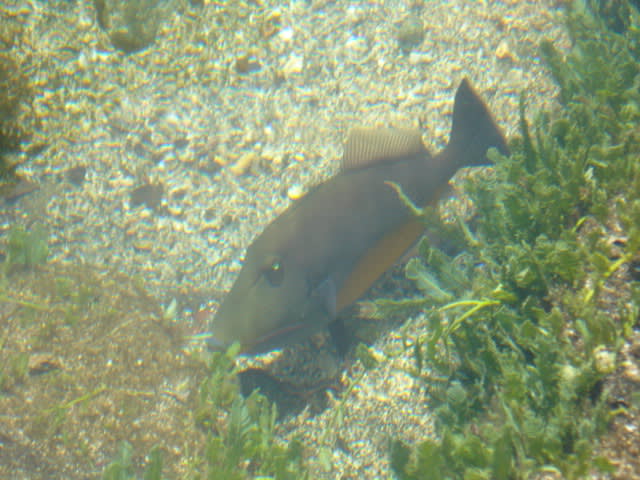
Taxonomy
- Kingdom
- Animalia
- Phylum
- Chordata
- Class
- Actinopterygii
- Order
- Beloniformes
- Family
- Balistidae
- Genus
- Sufflamen
- Species
- verres
Habitat
Orangeside triggerfish primarily inhabit coral reefs and rocky substrates in the Eastern Pacific Ocean, often in areas with abundant crevices for shelter. They prefer depths from 3 to 30 meters and are commonly found in tropical waters around islands and coasts, such as the Galapagos and Baja California.
Diet
Orangeside triggerfish feed on benthic invertebrates like crabs, sea urchins, and mollusks, as well as algae and small fish. They use their powerful jaws to crush hard-shelled prey and forage actively during the day, often defending feeding territories from competitors.
Behavior
Orangeside triggerfish are typically solitary or found in pairs and exhibit strong territorial behavior, aggressively chasing away intruders near their habitats. They are diurnal, active during the day for feeding and exploration, and often wedge themselves into crevices using their trigger spine for protection at night. This species displays bold defensive postures when threatened.
Fishing
Target the Orangeside triggerfish, a vibrant reef dweller in the Eastern Pacific, using effective bottom fishing techniques like drifting or anchored setups with medium-action rods and reels spooled with 10-20 pound test line to handle their strong pulls and territorial fights; opt for circle hooks sized 2/0 to 4/0 paired with bait such as live crabs, shrimp, or small mollusks to mimic their natural diet, or use jig heads with soft plastics that imitate benthic invertebrates for added success. The best seasons are the warmer months from spring through fall when they are more active and spawning, with prime fishing times during daylight hours, especially mid-morning to late afternoon when they forage aggressively in their territories. Focus on coral reefs and rocky substrates in depths of 3 to 30 meters around areas like the Galapagos Islands, Baja California, and Costa Rican coasts, where positioning your boat over structure and using chum to attract them can boost catches. This species typically reaches up to 30 cm (12 inches) and 2 lbs 4 oz, with no specific IGFA all-tackle record listed, but anglers should aim for fish in this size range for a thrilling fight. Conservation-wise, Orangeside triggerfish are classified as Least Concern by the IUCN, benefiting from angler-funded programs that support habitat protection in these tropical waters; practice catch-and-release for smaller fish to maintain healthy populations, and adhere to local regulations such as size limits or seasonal closures in places like Mexico and Costa Rica, which serve as effective management tools to ensure sustainable fishing and protect reef ecosystems for future generations.
Conservation Status
Listed as Least Concern by IUCN.