
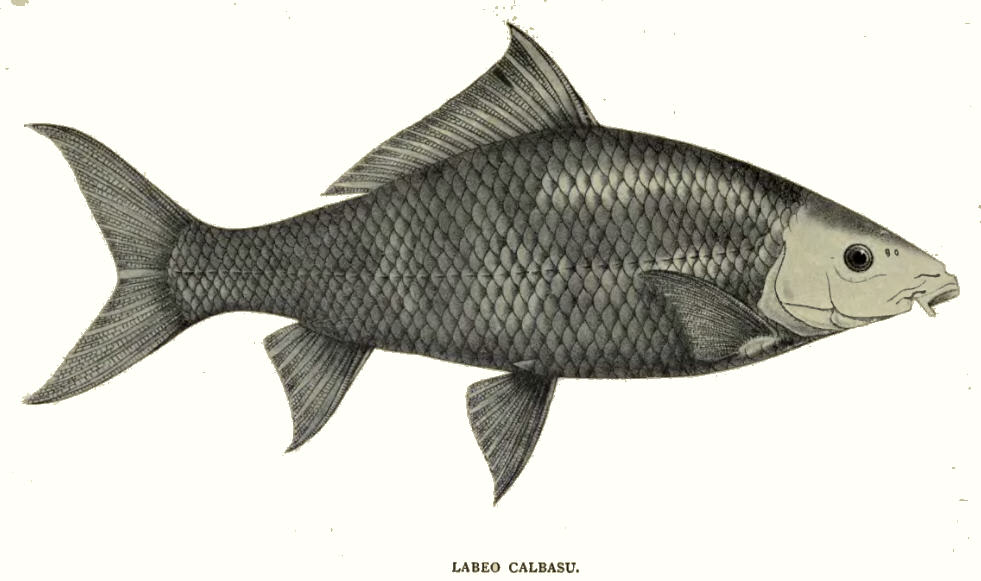
Taxonomy
- Kingdom
- Animalia
- Phylum
- Chordata
- Class
- Actinopterygii
- Order
- Neopterygii
- Family
- Cyprinidae
- Genus
- Labeo
- Species
- calbasu
Habitat
Orangefin labeo primarily inhabit freshwater rivers, lakes, and reservoirs in South Asia, including the Cauvery River in India and areas in Bangladesh and Thailand. They prefer warm waters with slow to moderate currents, often in vegetated or sandy-bottomed environments, and can tolerate a range of water qualities from clear to turbid.
Diet
Orangefin labeo mainly feed on algae, aquatic plants, and detritus scraped from the river bottom, supplementing with small invertebrates and organic matter. They exhibit bottom-feeding behavior, foraging actively during the day in shallow waters. Feeding intensity increases during the wet season when food sources are abundant.
Behavior
Orangefin labeo are schooling fish that form groups to forage and evade predators, often seen swimming in mid-water or near the bottom. They are diurnal, active during daylight hours for feeding and resting at night in deeper waters. During breeding seasons, they may exhibit migratory behavior, moving upstream to spawn in suitable habitats.
Fishing
The Orangefin labeo, a popular target for recreational and subsistence anglers in South Asia, offers exciting bottom-fishing opportunities that support conservation through license fees and habitat programs. Target them using simple bottom-fishing techniques with a sinker to keep bait near the riverbed, casting into slow to moderate currents in vegetated or sandy-bottomed areas of rivers like the Cauvery in India, or lakes in Bangladesh and Thailand; focus on depths of 5-15 feet where they forage during the day. Use light to medium spinning rods with 6-10 lb test line, size 6-10 hooks, and effective baits like worms, dough balls, or plant-based lures to mimic their diet of algae and detritus, ensuring steady bites in warmer waters. The best season is the monsoon months from June to September, when feeding activity peaks during daylight hours, making early morning or late afternoon ideal for higher catch rates. Adults typically weigh up to 5 lbs 15 oz and reach 30-60 cm, with no specific IGFA records, but local angling records in India highlight their potential. As a Least Concern species with stable populations, catch-and-release practices and slot limits in some regions serve as effective management tools to maintain healthy stocks, while angler-funded initiatives in South Asia protect waterways and support stocking programs for sustainable fishing.
Conservation Status
Listed as Least Concern by IUCN.