
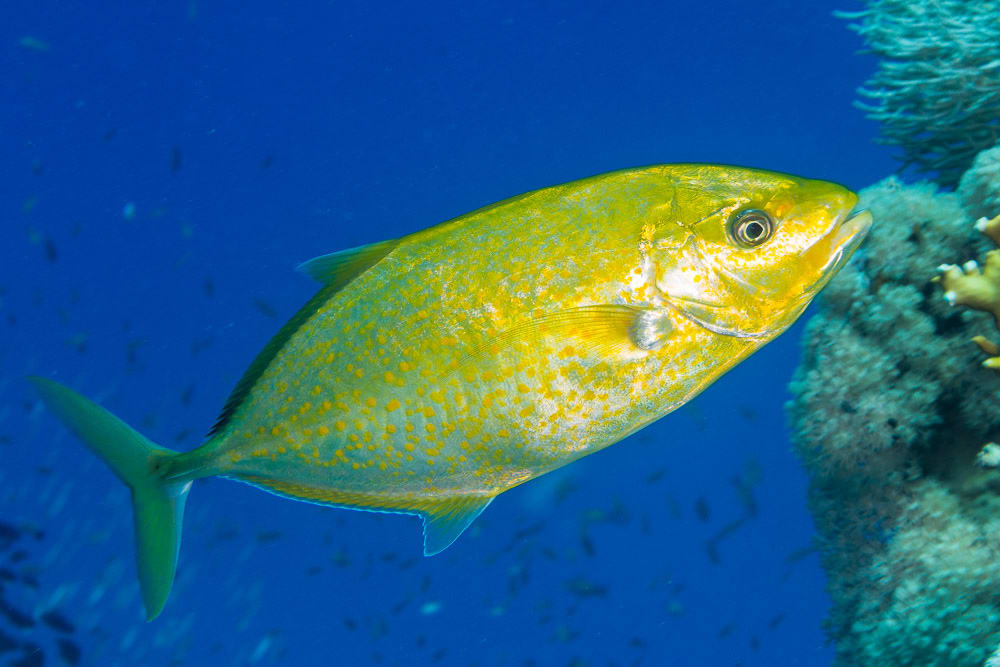
Taxonomy
- Kingdom
- Animalia
- Phylum
- Chordata
- Class
- Actinopterygii
- Order
- Cichliformes
- Family
- Carangidae
- Genus
- Carangoides
- Species
- bajad
Habitat
Primarily found in coastal waters, coral reefs, and lagoons of the Indo-Pacific region, often at depths of 10 to 100 meters. They prefer areas with sandy or rocky substrates and strong currents, avoiding very turbid waters. This species is commonly encountered around islands and continental shelves in tropical and subtropical zones.
Diet
Feeds mainly on small fish, crustaceans like shrimp and crabs, and cephalopods such as squid. They are active predators that hunt in schools, using ambush tactics to capture prey. Feeding is most intense during daylight hours, particularly at dawn and dusk.
Behavior
They form schools for protection and cooperative hunting, often swimming near the surface or mid-water. Active during the day and more sedentary at night, they can exhibit territorial behavior around feeding areas. This species is known for its agility and speed when evading threats or pursuing prey.
Fishing
Anglers targeting the Orange-spotted trevally, a popular sport fish in the Indo-Pacific, should focus on trolling with lures or casting jigs to mimic their prey like small fish and crustaceans, as these techniques capitalize on their schooling and ambush hunting behavior for thrilling fights. Use medium-light spinning rods with 10-20 lb test line and reels with a good drag system to handle their speed and agility, paired with effective baits such as live shrimp, small baitfish, or metal jigs and soft plastics in colors like silver and orange to match their diet. The best seasons are the warmer months from spring to summer when spawning occurs, with peak activity at dawn and dusk in tropical and subtropical zones; target them in coastal waters, coral reefs, and lagoons at depths of 10-100 meters around islands, continental shelves, and areas with sandy or rocky substrates for the highest success. Typical sizes range from 30-50 cm, with record lengths up to 60 cm and weights to 1 lb, though IGFA all-tackle records aren't specified for this species. As a Least Concern species per IUCN, conservation efforts are bolstered by regulated fishing practices like catch-and-release and slot limits in some regions, which are effective tools funded by angler licenses to ensure stable populations and protect critical habitats in the Indian and Pacific Oceans.
Conservation Status
Listed as Least Concern by IUCN.