
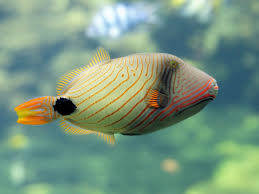
Taxonomy
- Kingdom
- Animalia
- Phylum
- Chordata
- Class
- Actinopterygii
- Order
- Beloniformes
- Family
- Balistidae
- Genus
- Balistapus
- Species
- undulatus
Habitat
This species inhabits coral reefs and rocky areas in tropical marine environments, typically at depths of 3 to 30 meters. It prefers clear, warm waters of the Indo-Pacific region, including lagoons, seaward reefs, and areas with abundant coral cover for shelter and foraging.
Diet
The Orange-Lined Triggerfish feeds primarily on benthic invertebrates such as crabs, sea urchins, and mollusks, along with algae and small fish. It uses its strong teeth to crush hard-shelled prey and forages during the day, often defending feeding territories aggressively.
Behavior
This fish is territorial and often solitary or found in pairs, aggressively defending its area from intruders using its trigger spine. It is diurnal, active during the day for feeding and resting in crevices at night, and may engage in displays like flaring fins to ward off threats. During breeding, males become particularly aggressive to protect nesting sites.
Fishing
The Orange-Lined Triggerfish is a popular target for recreational anglers in the Indo-Pacific, offering exciting challenges due to its territorial nature and strong fights on light tackle, while supporting conservation through license fees that fund habitat protection in coral reef ecosystems. Employ bottom fishing techniques with a focus on precision, using baited hooks or jigs dropped near coral structures to mimic their diet of crabs and mollusks—opt for live or cut bait like shrimp, crabs, or squid, paired with brightly colored lures for added attraction. Recommended tackle includes light to medium spinning rods (6-10 lb test line) with circle hooks to minimize injury during catch-and-release, ensuring sustainable practices that help maintain healthy populations. The best season is year-round in tropical waters, with peak activity during warmer months when fish are more aggressive, and target them during daylight hours when they actively forage. Focus on habitats like coral reefs, lagoons, and seaward reefs at depths of 3 to 30 meters in areas such as the Great Barrier Reef or Red Sea, where clear, warm waters provide ideal conditions—approach cautiously to avoid spooking these territorial fish. Record sizes reach up to 40 cm (about 16 inches) in length, with the IGFA all-tackle world record for triggerfish species generally highlighting their appeal as sport fish. Conservation efforts, including angler-funded programs for reef restoration, benefit from practices like slot limits and catch-and-release, which are effective tools for preserving stable populations in these vibrant marine environments.
Conservation Status
Listed as Not Evaluated by IUCN.