
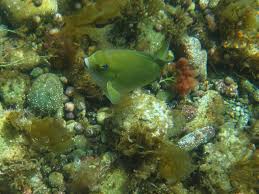
Taxonomy
- Kingdom
- Animalia
- Phylum
- Chordata
- Class
- Actinopterygii
- Order
- Perciformes
- Family
- Kyphosidae
- Genus
- Girella
- Species
- nigricans
Habitat
Opaleye inhabit rocky reefs and kelp forests in shallow coastal waters, typically from the intertidal zone to depths of about 50 meters. They prefer areas with abundant algae along the eastern Pacific, from southern California to Baja California. These environments provide both food and shelter from predators.
Diet
Opaleye primarily feed on algae and seaweed, using their specialized teeth to scrape these off rocks. They occasionally consume small invertebrates like crustaceans or mollusks. Feeding occurs mainly during the day, with individuals grazing in schools along the substrate.
Behavior
Opaleye are schooling fish that form loose groups for protection and feeding, often seen swimming near the bottom in kelp beds. They are diurnal, active during daylight hours for foraging, and exhibit territorial behavior around prime grazing areas. These fish are generally wary and quick to dart into crevices when threatened.
Fishing
Opaleye (Girella nigricans) are a fun target for recreational anglers along the California coast and into Baja California, where they inhabit rocky reefs and kelp forests in shallow waters up to 50 meters, making them ideal for inshore fishing from piers, rocks, or kayaks—focus on areas with abundant algae for the best action. Use bottom fishing techniques like dropping bait near structures or light jigging to entice these wary, schooling fish, which are most active during the day when they feed on algae and small invertebrates. Opt for light tackle such as a 7-9 foot spinning rod with 6-10 lb test line, a simple Carolina rig, and size 1-2 hooks to handle their average size of 8-12 inches, though larger ones up to 18 inches and 2 pounds 1 ounce have been recorded. Effective baits include shrimp, mussels, or even bits of algae to mimic their natural diet, while small jigs or soft plastics can also work for a more active approach. The best seasons are spring and summer when water temperatures rise and spawning occurs, with peak bites during daylight hours, especially mid-morning to late afternoon. Anglers contribute to conservation by purchasing licenses that fund habitat restoration and monitoring programs, ensuring Opaleye populations remain stable and abundant as per their IUCN Least Concern status—practice catch-and-release for fish under slot limits to support these effective management tools that promote healthy fisheries.
Conservation Status
Listed as Least Concern by IUCN.