
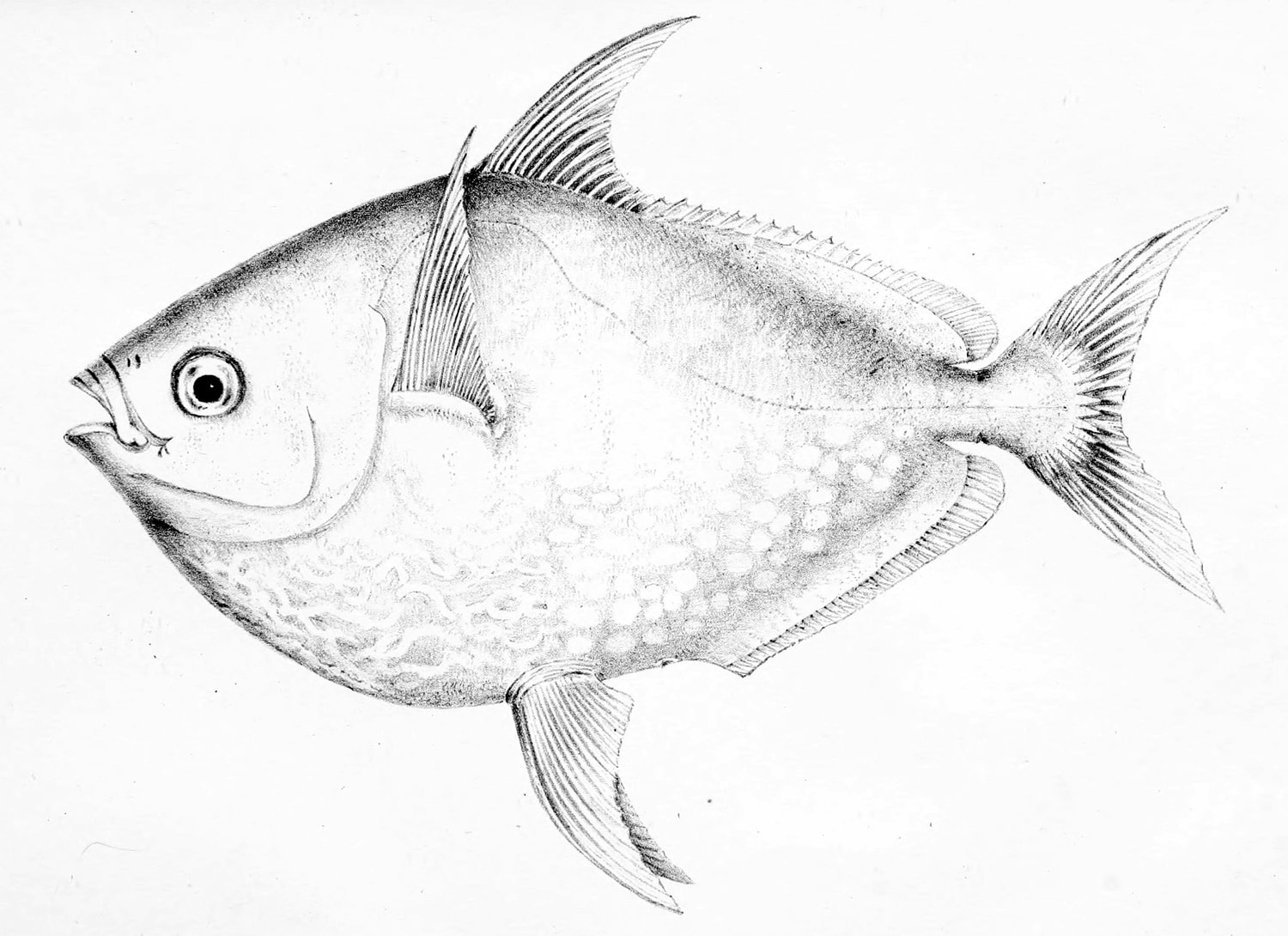
Taxonomy
- Kingdom
- Animalia
- Phylum
- Chordata
- Class
- Actinopterygii
- Order
- Perciformes
- Family
- Lampridae
- Genus
- Lampris
- Species
- guttatus
Habitat
Opah inhabit open pelagic waters of the world's oceans, typically in depths from 50 to 900 meters, preferring tropical and temperate regions. They are often found in areas with strong currents and are highly migratory, following prey across vast oceanic expanses.
Diet
Opah primarily feed on squid, small fish such as lanternfish, and crustaceans like krill. They are active predators that hunt in midwater depths, using their speed to chase down prey, and they feed opportunistically throughout the day and night.
Behavior
Opah are generally solitary or form loose aggregations, and they exhibit vertical migrations to follow food sources in the water column. They are fast swimmers capable of bursts up to 50 km/h and show curiosity towards boats or divers. Little is known about territorial behavior, but they do not appear to defend specific areas.
Fishing
Opah, a highly regarded deep-sea game fish, are best targeted using trolling techniques with heavy tackle in open pelagic waters across the world's oceans, particularly in tropical and temperate regions from 50 to 900 meters deep where strong currents prevail. Employ stout rods rated for 50- to 80-pound class, paired with high-capacity reels spooled with 80- to 130-pound monofilament or braided line, and use large lures or bait such as squid, mackerel, or skirted trolling lures that mimic their primary prey of small fish and crustaceans for effective strikes. The best seasons are year-round in warmer waters, with peak activity at dawn and dusk, though they feed opportunistically day and night; target areas like the Pacific or Atlantic Oceans during migrations to maximize success. The IGFA all-tackle world record is 278 pounds 8 ounces, caught off California, highlighting the excitement of pursuing these powerful swimmers. Conservation efforts for opah, listed as Least Concern by the IUCN, benefit from angler-funded programs that promote sustainable practices like catch-and-release and habitat protection, ensuring healthy populations through effective international management tools that support global ocean conservation.
Conservation Status
Listed as Least Concern by IUCN.