
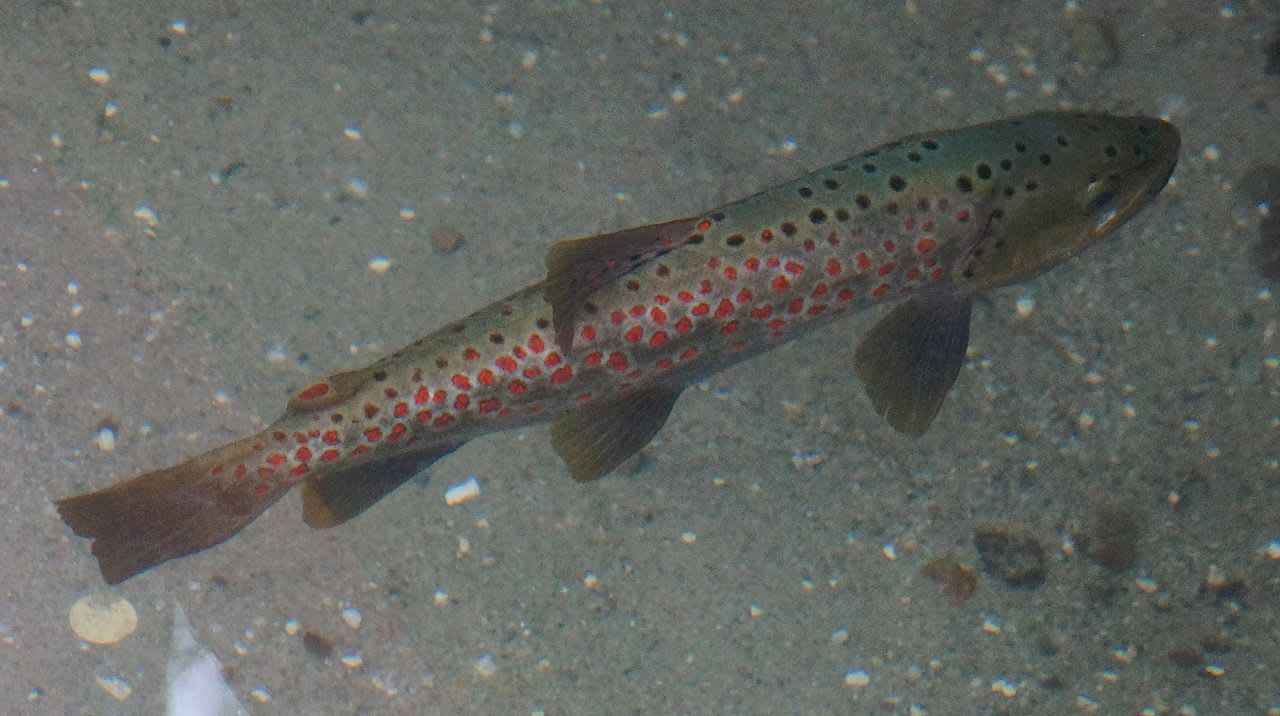
Taxonomy
- Kingdom
- Animalia
- Phylum
- Chordata
- Class
- Actinopterygii
- Order
- Perciformes
- Family
- Salmonidae
- Genus
- Salmo
- Species
- letnica
Habitat
Ohrid trout are endemic to Lake Ohrid, a deep, ancient freshwater lake straddling the border of Albania and North Macedonia. They prefer cold, oligotrophic waters with depths exceeding 100 meters and rocky or gravel substrates. This species is adapted to both pelagic and near-shore environments within the lake.
Diet
Ohrid trout primarily feed on small fish such as bleak and other minnows, as well as insects, crustaceans, and zooplankton. They exhibit opportunistic feeding behavior, often hunting in open water during dawn and dusk when prey is most active. Juveniles focus more on plankton and small invertebrates near the lake's surface.
Behavior
Ohrid trout are typically solitary and territorial, particularly in deeper waters where they patrol for food. They are most active during cooler periods, such as early morning or night, and migrate to tributaries for spawning. This species shows adaptability to varying oxygen levels in the lake's stratified waters.
Fishing
Targeting the Ohrid trout in Lake Ohrid, straddling Albania and North Macedonia, offers anglers a rewarding challenge while supporting conservation efforts through regulated fishing that funds habitat protection and population monitoring; use trolling or casting techniques with light to medium spinning or fly fishing gear, including a 6-8 foot rod, 4-8 lb test line, and reels with a smooth drag to handle their strong runs in deep waters. Opt for lures that mimic their primary prey like small fish and insects, such as spoons, spinners, or streamer flies in silver or green hues, or live bait like minnows and crustaceans for the best results. The prime season is late spring through early fall, with peak activity at dawn and dusk in cold, oligotrophic waters deeper than 100 meters over rocky or gravel substrates, where they patrol solitarily—focus on near-shore areas during spawning migrations in late autumn or early winter. The IGFA all-tackle world record for Ohrid trout stands at 14 pounds 4 ounces, caught in Lake Ohrid, highlighting their impressive size potential up to 60 cm. Conservation-wise, as a species listed as Data Deficient by the IUCN with a declining population due to overfishing, anglers should adhere to local regulations like catch-and-release practices and slot limits as effective tools to maintain healthy stocks, ensuring that license fees and excise taxes from fishing activities continue to fund essential restoration programs in this ancient lake ecosystem.
Conservation Status
Listed as Data Deficient by IUCN.