
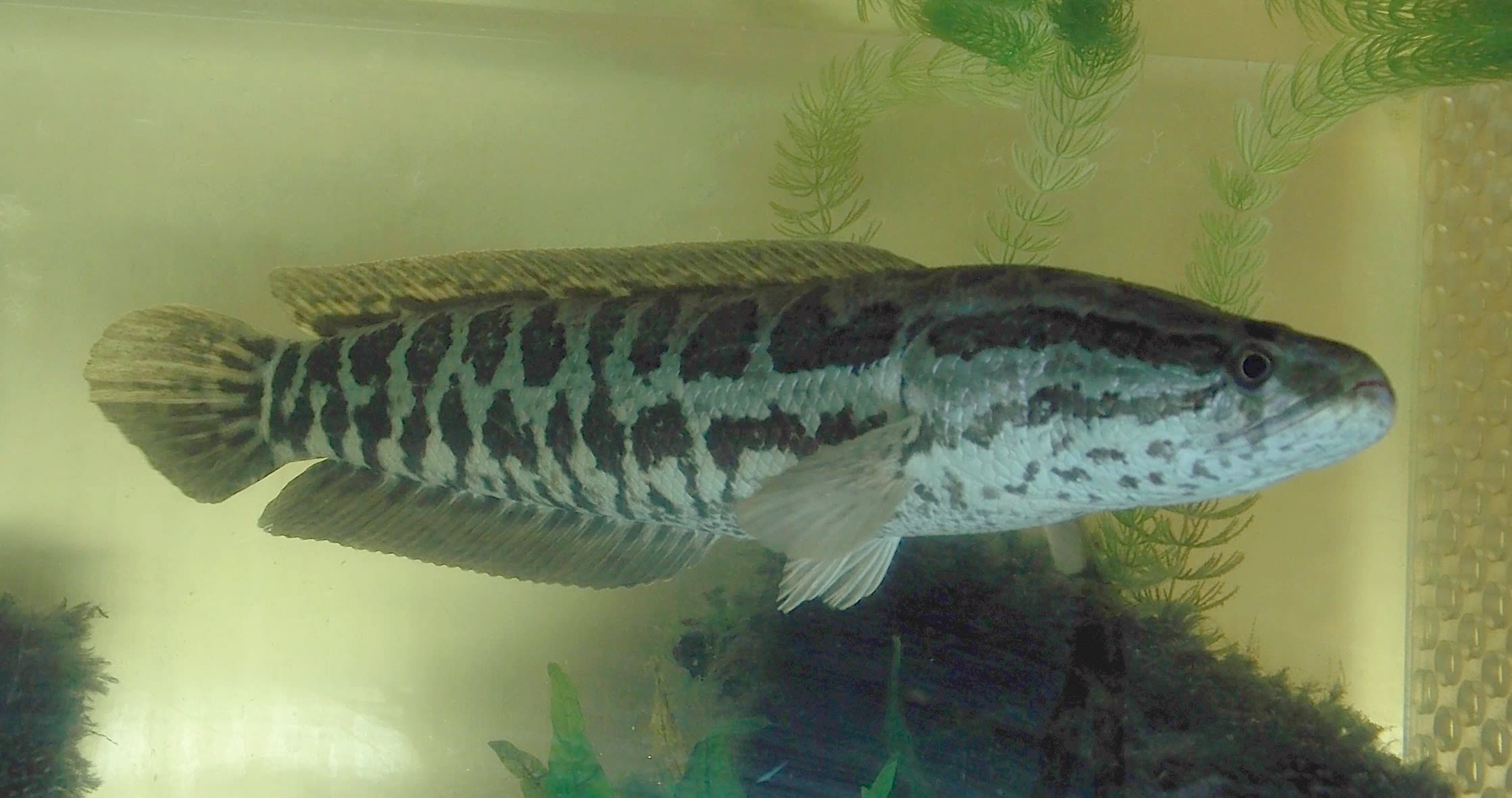
Taxonomy
- Kingdom
- Animalia
- Phylum
- Chordata
- Class
- Actinopterygii
- Order
- Cypriniformes
- Family
- Channidae
- Genus
- Channa
- Species
- argus
Habitat
Native to freshwater systems in East Asia, such as rivers, lakes, and ponds with abundant vegetation in countries like China, Russia, and Korea. It thrives in slow-moving or stagnant waters with mud bottoms and dense plant cover, and as an invasive species in North America, it occupies similar habitats in the eastern United States, including the Potomac River basin.
Diet
The northern snakehead is a carnivorous ambush predator that primarily eats fish, frogs, insects, crustaceans, and occasionally small birds or mammals. It feeds mainly during the day, lurking in vegetation to strike quickly at prey, and juveniles consume smaller invertebrates while adults target larger vertebrates.
Behavior
Northern snakeheads are solitary and territorial, particularly during breeding when they aggressively defend nests. They are primarily diurnal hunters that use ambush tactics in vegetated areas and can survive out of water for several days by breathing air, allowing them to move over land to new habitats. These fish exhibit parental care, with males guarding eggs and fry, and they are known for their rapid growth and adaptability in various environments.
Fishing
Target the invasive Northern snakehead as a key conservation tool in managing its populations in North America, using proven techniques like casting topwater lures, flipping soft plastics into vegetation, or fishing with live bait to mimic its prey such as minnows or frogs for effective strikes. Opt for medium-heavy spinning or baitcasting rods paired with reels spooled in 20-30 lb test braided line, along with 3/0 to 5/0 hooks and weedless rigs to handle their aggressive fights in snaggy cover. Use lures like buzzbaits, swim jigs, or live shiners for the best results, as these replicate the fish's carnivorous diet. The prime season runs from late spring through summer when water temperatures exceed 66°F during spawning, with peak activity in the early morning or late afternoon on sunny days; focus your efforts in slow-moving freshwater habitats like rivers, lakes, and ponds with dense vegetation and mud bottoms, such as the Potomac River basin in Virginia and Maryland, where targeted fishing helps control their spread. Record sizes can reach up to 17 pounds 12 ounces and 4 feet in length, with the IGFA all-tackle world record at 19 pounds 5 ounces caught in South Korea. As an invasive species, regulations in the U.S., such as no bag limits in some areas, serve as effective management tools to support habitat restoration and protect native fish populations through angler-funded programs that promote harvesting to maintain balanced ecosystems.
Conservation Status
Listed as Not Evaluated by IUCN.