
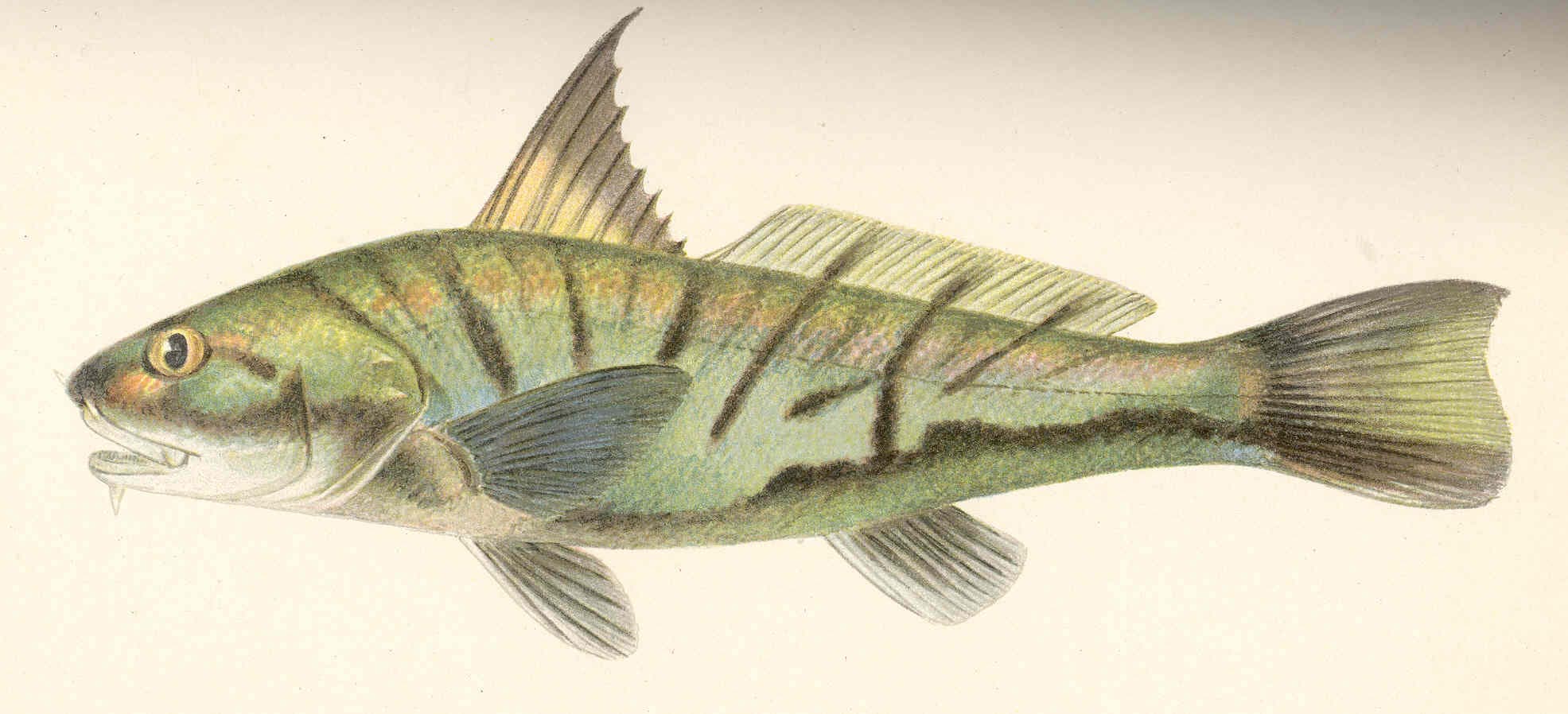
Taxonomy
- Kingdom
- Animalia
- Phylum
- Chordata
- Class
- Actinopterygii
- Order
- Perciformes
- Family
- Sciaenidae
- Genus
- Menticirrhus
- Species
- saxatilis
Habitat
Northern kingfish inhabit coastal waters, bays, and estuaries along the western Atlantic from Massachusetts to Florida, preferring sandy or muddy bottoms in shallow areas up to 30 meters deep. They are commonly found in surf zones and nearshore environments, often migrating seasonally to warmer waters in winter.
Diet
Northern kingfish primarily feed on small crustaceans like shrimp and crabs, as well as worms and small fish, which they detect using their chin barbels. They forage along the ocean floor, typically during low light conditions like dawn or dusk, employing a bury-and-ambush strategy in sandy substrates.
Behavior
Northern kingfish are generally solitary or found in small groups, often burying themselves in sand to avoid predators or ambush prey. They are most active at night or during twilight hours, exhibiting migratory behavior to follow food sources or warmer waters seasonally. They are not highly territorial but may compete for feeding spots in crowded areas.
Fishing
Anglers targeting Northern kingfish, a popular sport fish along the Atlantic coast, can use effective bottom fishing techniques like surf casting or still fishing with a simple rig to capitalize on their bottom-dwelling habits. Opt for medium-light tackle, including a 7-9 foot rod with 10-20 lb test line, paired with a sinker and a #2-4 hook baited with shrimp, crabs, or bloodworms to mimic their diet of small crustaceans and worms; jigs and soft plastic lures can also work in turbulent waters. The best season is summer from May to August during their spawning period, with peak activity at dawn or dusk when they forage in shallow, sandy or muddy bottoms of coastal waters, bays, estuaries, and surf zones from Massachusetts to Florida, up to 30 meters deep—focus on areas with wave action for the best results. Record sizes include fish up to 61 cm in length and 2 lbs 7 oz in weight, with the IGFA all-tackle world record standing as a testament to their fighting spirit. Conservation efforts are supported by recreational fishing, as license fees and taxes fund habitat restoration programs that keep Northern kingfish populations stable and listed as Least Concern by the IUCN; always follow local slot limits and catch-and-release practices as effective management tools to ensure sustainable fisheries in these dynamic marine environments.
Conservation Status
Listed as Least Concern by IUCN.