
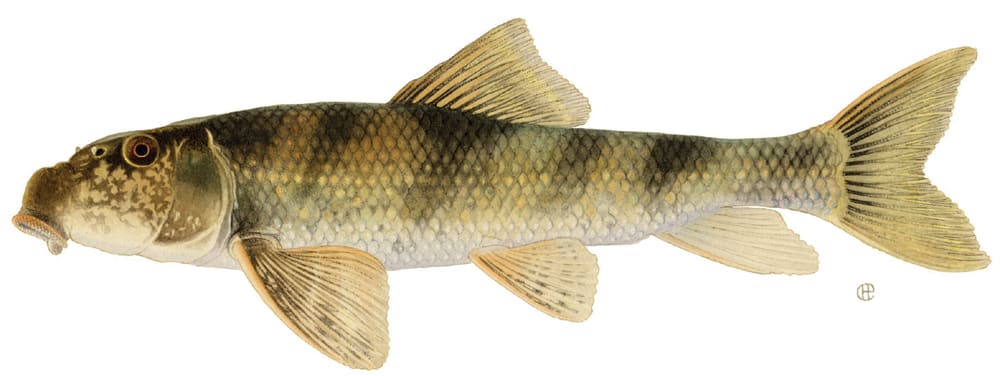
Taxonomy
- Kingdom
- Animalia
- Phylum
- Chordata
- Class
- Actinopterygii
- Order
- Cypriniformes
- Family
- Catostomidae
- Genus
- Hypentelium
- Species
- nigricans
Habitat
This fish prefers clear, fast-flowing streams and rivers with gravel, rubble, or boulder substrates, often in riffles and runs. It is commonly found in the eastern United States and southeastern Canada, including the Great Lakes, Mississippi River Basin, and Atlantic Slope drainages. It thrives in cool to warm waters with good oxygen levels.
Diet
The Northern hogsucker primarily feeds on aquatic insects, larvae, and small crustaceans by sucking them from rocks and gravel. It also consumes algae, detritus, and plant material, using its specialized mouth to forage along the river bottom. Feeding activity peaks during the day in shallow, flowing waters.
Behavior
Northern hogsuckers are solitary and bottom-dwelling, spending most of their time hiding under rocks or in crevices to avoid predators. They are diurnal, actively foraging in riffles during the day, and may exhibit territorial behavior around spawning sites. In winter, they become less active and seek deeper pools.
Conservation Status
Listed as Least Concern by IUCN.