
Overview
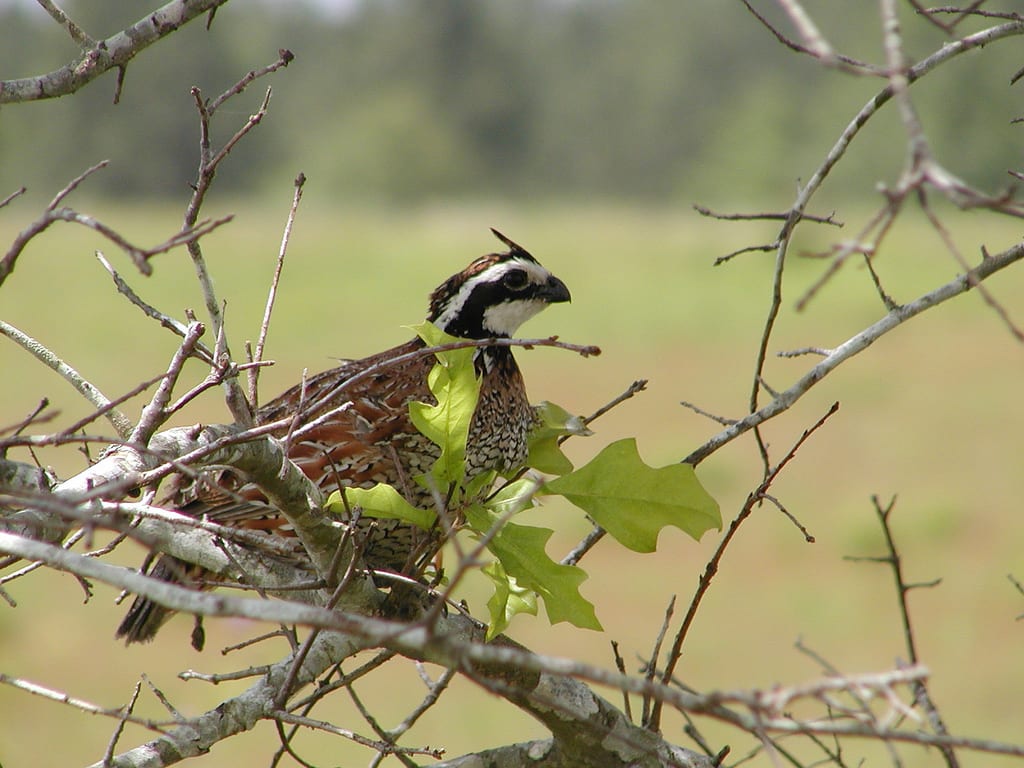
It has the typical chunky, rounded shape of a quail. The bill is short, curved and brown-black in color. This species is sexually dimorphic. Males have a white throat and brow stripe bordered by black. The overall rufous plumage has gray mottling on the wings, white scalloped stripes on the flanks, and black scallops on the whitish underparts. The tail is gray. Females are similar but are duller overall and have a buff throat and brow without the black border. Both sexes have pale legs and feet.
Taxonomy
- Kingdom
- Animalia
- Phylum
- Chordata
- Class
- Bird
- Family
- Odontophoridae
- Genus
- Colinus
- Species
- virginianus
Habitat
The Northern Bobwhite quail can be found in grass lands, wood edges, shrubland, agricultural fields, and open woodland areas. Ample ground cover is necessary for escape and nesting.
Diet
Seeds, insects, plant material, berries.
Behavior
Like most game birds, they are shy and elusive. When threatened, it will crouch and freeze, relying on camouflage to stay undetected, but will flush into low flight if closely disturbed. It is generally solitary or paired early in the year, but family groups are common in the late summer and winter roosts may have two dozen or more birds in a single covey.
Hunting
Hunting the Northern bobwhite quail is a classic upland game bird pursuit that relies on skilled dog work to locate and flush coveys from grasslands, agricultural fields, and shrubby edges, with hunters using shotguns for quick, accurate shots on the rise; effective methods include walking hunts with pointers or flushers, and some managed preserves offer planted birds for beginners. Opt for 12-, 20-, or 28-gauge shotguns loaded with #7.5 to #9 shot for optimal patterning at short ranges, ensuring quick, humane harvests through precise shot placement targeting the head and vital areas. The best seasons span late fall through winter, from October to February depending on the state, to align with post-breeding population peaks and cooler weather that concentrates birds into coveys, promoting sustainable harvests under regulated bag limits. While quail aren't typically trophy animals, success is measured by the number of birds harvested within legal quotas, with records tracked informally through organizations like the National Sporting Clays Association. Legal hunting is available across the southeastern United States, including states like Texas, Oklahoma, Kansas, and others in its range, on both public lands managed by state wildlife agencies and private hunting preserves; these programs are backed by hunter-funded initiatives such as the Pittman-Robertson Act, which has channeled billions into habitat restoration and population monitoring, demonstrating how regulated hunting sustains quail numbers and counters threats like habitat fragmentation, even as the species is listed as Near Threatened by IUCN in some contexts.
Conservation Status
Listed as Near Threatened by IUCN.