
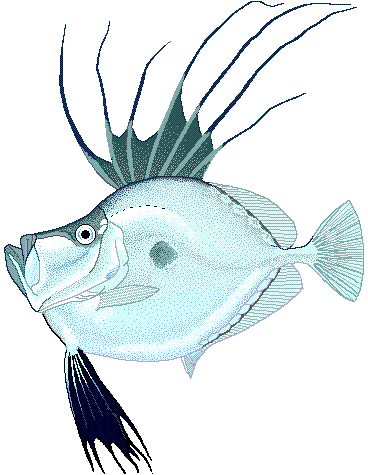
Taxonomy
- Kingdom
- Animalia
- Phylum
- Chordata
- Class
- Actinopterygii
- Order
- Zeiformes
- Family
- Zeidae
- Genus
- Zenopsis
- Species
- nebulosa
Habitat
Mirror dories primarily inhabit deep continental shelf waters and slopes at depths of 100 to 600 meters in the Indian and Pacific Oceans. They prefer areas with sandy or muddy substrates and are often found near underwater structures like seamounts or ridges. This species avoids shallow coastal areas, favoring cooler, deeper oceanic environments.
Diet
Mirror dories feed mainly on small fish, squid, and crustaceans such as shrimp. They are ambush predators that hunt in mid-water or near the seafloor, often at night when they are most active. Their feeding behavior involves quick strikes to capture prey.
Behavior
Mirror dories are typically solitary or form loose schools, exhibiting nocturnal activity patterns to avoid predators. They migrate vertically in the water column to follow prey and are not strongly territorial. During the day, they often rest on the bottom in deeper waters.
Fishing
As an experienced fishing guide, target mirror dory with deep-sea bottom fishing techniques, using heavy tackle to handle depths of 100 to 600 meters, such as sturdy rods with high-capacity reels, strong monofilament or braided lines (20-50 lb test), and large sinkers to reach the seafloor, paired with bait like fresh squid, small fish strips, or shrimp-imitation lures to mimic their natural prey of small fish and crustaceans. The best seasons are spring and summer during warmer months when they spawn and are more active, with prime fishing times at night in deeper waters near sandy or muddy substrates, seamounts, or ridges in the Indian and Pacific Oceans, including spots off northwest Australia, New Zealand, or California. Anglers should focus on these offshore habitats while adhering to local regulations, which promote sustainable practices like size limits to maintain healthy populations—recreational fishing license fees directly support conservation efforts, including habitat protection and stocking programs that ensure thriving mirror dory stocks for future generations. The IGFA all-tackle record is approximately 9 pounds 3 ounces, highlighting the thrill of landing these deep-water fighters.
Conservation Status
Listed as Not Evaluated by IUCN.