
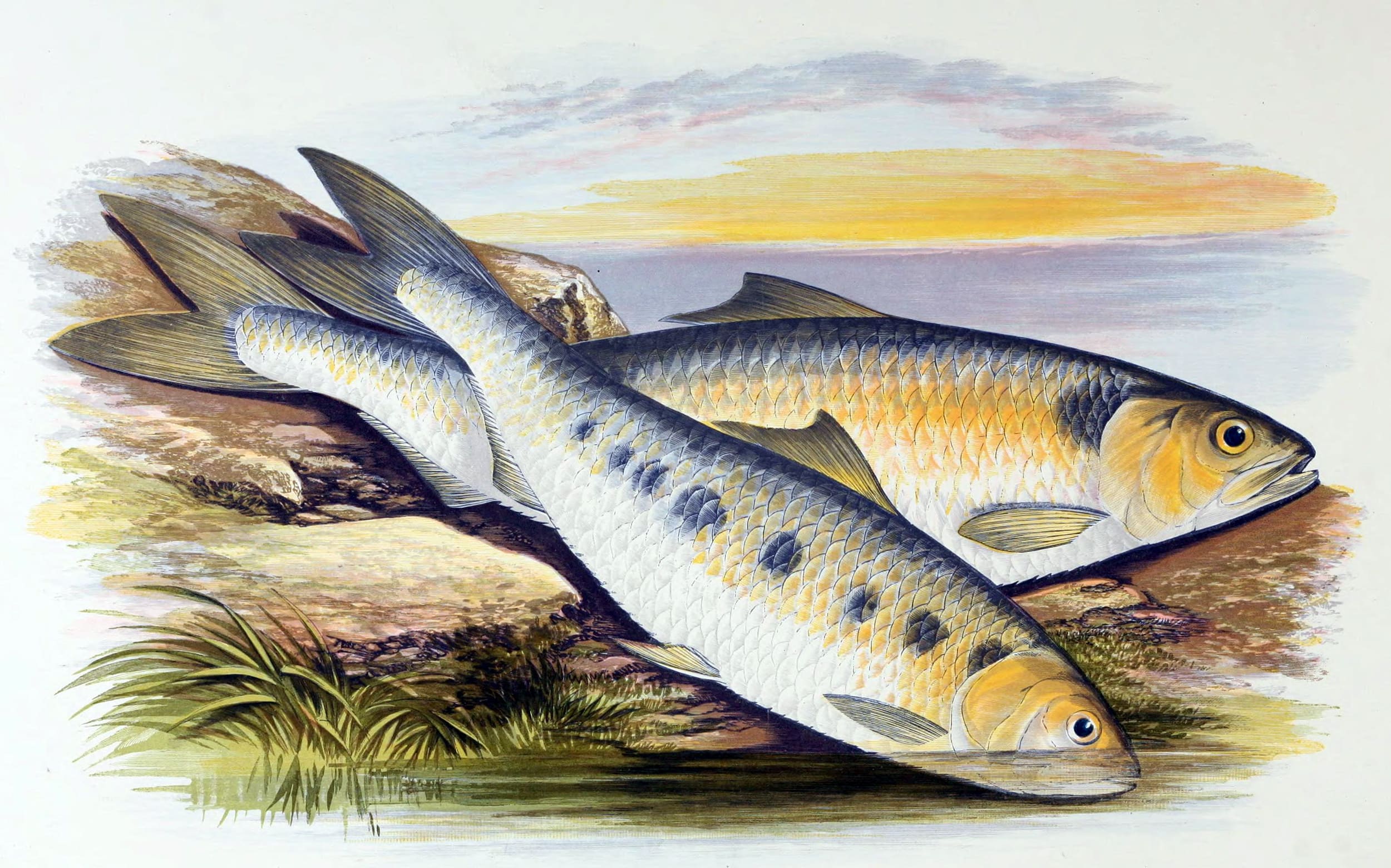
Taxonomy
- Kingdom
- Animalia
- Phylum
- Chordata
- Class
- Actinopterygii
- Order
- Gadiformes
- Family
- Clupeidae
- Genus
- Alosa
- Species
- agone
Habitat
Mediterranean shad primarily inhabit large freshwater lakes and rivers in Northern Italy, such as Lake Garda and the Po River, preferring areas with moderate currents and depths. They are adapted to both lacustrine and riverine environments, often found in open waters with abundant plankton.
Diet
Squid, Small Fish, Small Crabs and other Crustaceans, and even Fish Eggs.
Behavior
Mediterranean shad form large schools for protection and feeding, which helps them evade predators in open waters. They are migratory, moving upstream in rivers during spawning season, and are most active during the day when they feed on plankton. These fish exhibit rapid, evasive swimming patterns when threatened.
Fishing
For targeting Mediterranean shad in Northern Italy's rivers like the Po or lakes such as Lake Garda and Lake Maggiore, use light spinning tackle with 6-10 lb test line, small reels, and rods around 6-8 feet for maneuverability in currents; effective baits and lures include small spoons, jigs, or flies that imitate their plankton-based diet, such as silver-colored lures or live minnows. Best techniques involve trolling slowly in open waters or casting near schools in moderate currents, focusing on daytime hours when these migratory fish are most active; prime seasons are spring during spawning migrations, offering exciting action as they move upstream. Target habitats with depths of 10-30 feet in large freshwater systems, where they form protective schools. These fish typically reach up to 2 pounds and 40 centimeters, with no specific IGFA records noted, but anglers can contribute to conservation by adhering to catch-and-release practices and supporting EU-funded programs that protect waterways through license fees and habitat restoration, ensuring stable populations as classified by the IUCN Least Concern status.
Conservation Status
Listed as Least Concern by IUCN.