
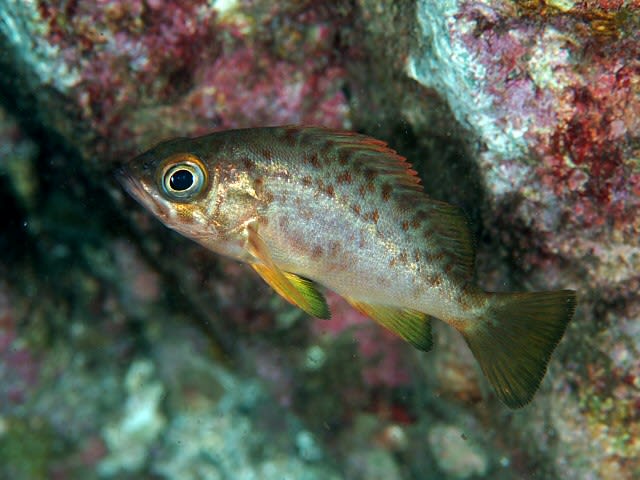
Taxonomy
- Kingdom
- Animalia
- Phylum
- Chordata
- Class
- Actinopterygii
- Order
- Salmoniformes
- Family
- Sebastidae
- Genus
- Sebastes
- Species
- inermis
Habitat
Mebaru inhabits rocky reefs and coastal waters in the Northwest Pacific, preferring depths from 10 to 150 meters where there are structures for hiding. They are commonly found in areas with strong currents and abundant marine vegetation, such as around Japan and the Korean Peninsula.
Diet
Mebaru primarily feeds on small fish, shrimp, crabs, and other benthic invertebrates. They are nocturnal hunters, foraging at night or dawn near the seafloor to ambush prey.
Behavior
Mebaru are solitary and territorial, often hiding in rock crevices during the day and becoming active at night to hunt. They exhibit minimal migration, staying close to their home reefs, and may defend small areas from intruders. This species is generally cautious, quickly retreating to cover when threatened.
Fishing
Target Mebaru, a popular rockfish in Japanese and Korean waters, using effective bottom fishing techniques like jigging or bait fishing near rocky reefs and structures to mimic their ambush hunting style; cast weighted rigs or jigs to depths of 10 to 150 meters, focusing on areas with strong currents and marine vegetation for the best results. Use medium-light to medium saltwater rods with 20-30 pound test line, paired with reels that handle rocky bottoms to prevent snags, and opt for baits like live shrimp, small fish, or crabs, or lures such as soft plastics and metal jigs that imitate their prey; this setup ensures you can feel subtle bites and land these cautious fish without excessive force. The best seasons are spring and fall when they are more active, with prime times at night or dawn due to their nocturnal habits, allowing anglers to capitalize on their feeding patterns while minimizing disturbance. Focus on habitats in the Northwest Pacific, such as around Southern Hokkaido, Chiba, Shirahama, Kyushu, and the Southern Korean Peninsula, where rocky reefs provide ideal cover—always respect local fishing spots to support habitat preservation. Mebaru can grow up to 40 cm and weigh around 2 lbs 7 oz, with no specific IGFA records, but targeting larger individuals helps maintain population balance. Conservation-wise, recreational fishing for Mebaru through regulated licensing in regions like Japan funds essential habitat restoration and monitoring programs, promoting healthy stocks via catch-and-release practices and seasonal guidelines that act as effective management tools to ensure sustainable populations in these vital coastal ecosystems.
Conservation Status
Listed as Not Evaluated by IUCN.