
Overview
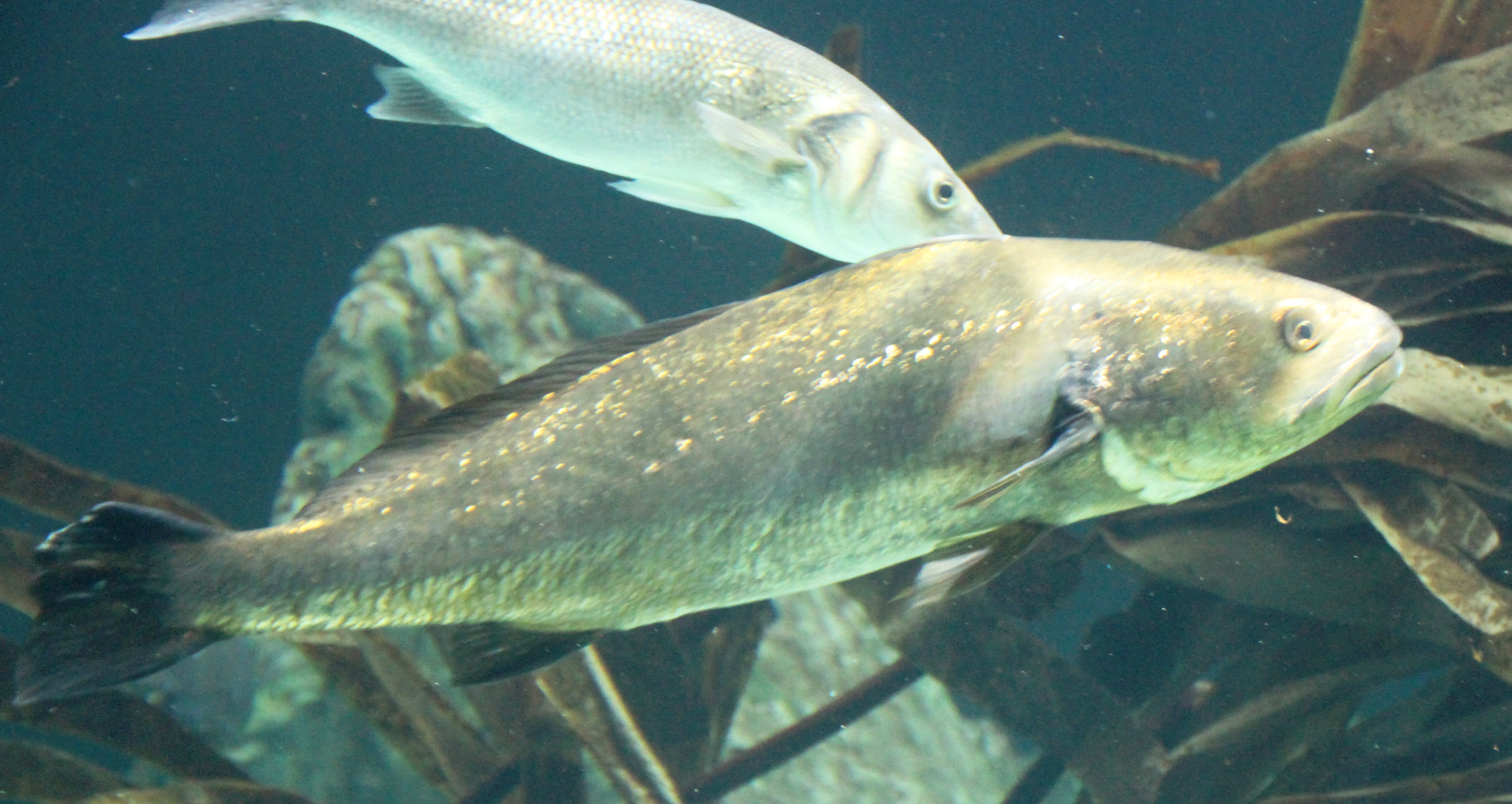
They have distinctive large, heavy scales extending onto the head and tail fin. Like all members of the drum family, they produce a drumming noise with muscles adjacent to the swim bladder. Drumming, generally associated with spawning, can be heard up to 98 feet away.
Taxonomy
- Kingdom
- Animalia
- Phylum
- Chordata
- Class
- Actinopterygii
- Order
- Perciformes
- Family
- Sciaenidae
- Genus
- Argyrosomus
- Species
- regius
Habitat
Meagre primarily inhabit coastal marine environments, including estuaries, sandy or muddy seabeds, and shallow waters up to 150 meters deep. They prefer areas with some structure like rocks or reefs for shelter and are commonly found in the Atlantic Ocean, Mediterranean Sea, and other warm temperate regions. These fish undertake seasonal migrations, moving to deeper waters in winter and shallower areas for spawning.
Diet
Meagre are carnivorous and primarily feed on smaller fish such as sardines, anchovies, and herring, as well as crustaceans like crabs and shrimp. They hunt using ambush tactics, often at night or during low visibility, relying on their sensitive lateral line to detect prey vibrations. Feeding typically occurs in schools or individually near the seafloor.
Behavior
Meagre are primarily nocturnal, spending nights actively foraging and days resting in deeper waters or hidden areas. They form schools, especially juveniles, for protection and feeding, and exhibit territorial behavior around spawning sites. These fish are known for producing drumming sounds with their swim bladder, used for communication during mating or to ward off threats.
Fishing
Because of their size and availability, meagre are high on the list of fish that recreational anglers dream of catching. The fish can caught during the day, but most trophy fish are caught at about dusk on a rising to high tide. Although most anglers use conventions tackle, a fly can be just as effectively in a school of fish.
Conservation Status
Listed as Least Concern by IUCN.