
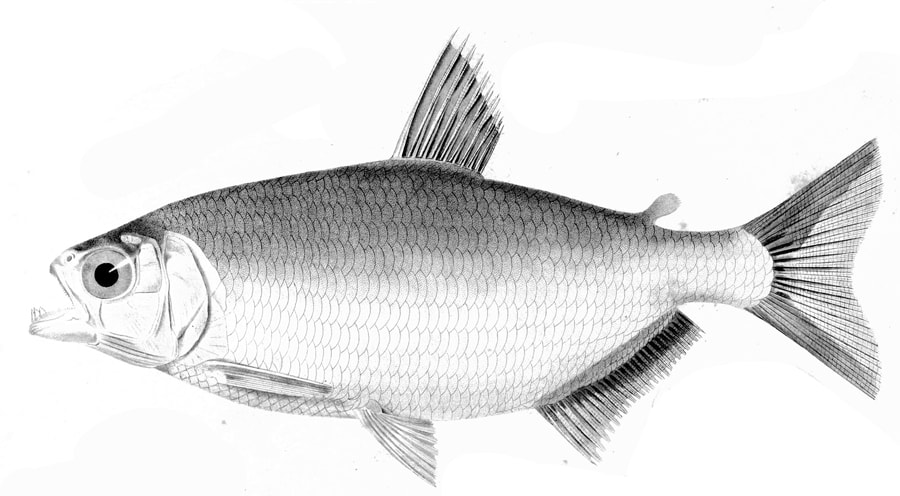
Taxonomy
- Kingdom
- Animalia
- Phylum
- Chordata
- Class
- Actinopterygii
- Order
- Cypriniformes
- Family
- Characidae
- Genus
- Brycon
- Species
- falcatus
Habitat
Matrincha primarily inhabits fast-flowing rivers and streams in the Amazon and Orinoco basins, preferring clear or slightly turbid waters with rocky or sandy substrates. It is found in tropical freshwater environments of South America, including areas with submerged vegetation and rapids. These fish avoid stagnant waters and thrive in regions with seasonal flooding.
Diet
Matrincha is omnivorous, feeding on fruits, seeds, insects, and smaller fish or crustaceans. It often forages near the surface or in mid-water columns, exhibiting opportunistic feeding behavior. This species is most active during daylight hours when food is abundant in the river systems.
Behavior
Matrincha is a schooling fish, often forming groups for protection and feeding, especially in juveniles. It is diurnal, active during the day and resting at night, with territorial behavior observed in adults defending prime feeding areas. This species may undertake seasonal migrations for spawning and is known for its strong swimming capabilities in fast currents.
Fishing
Matrincha (Brycon falcatus) is a thrilling sport fish in South America's Amazon and Orinoco River basins, where anglers can target them in fast-flowing rivers with rocky or sandy substrates and submerged vegetation, especially around rapids and areas with seasonal flooding—habitats that support healthy populations through angler-funded conservation efforts like habitat restoration in Brazil and Guyana. For the best results, use techniques such as casting lures or fly fishing to mimic their opportunistic feeding on insects, fruits, and small fish, with topwater or subsurface retrieves proving effective during daylight hours when they are most active; focus on mid-water columns near the surface for strikes. Recommended tackle includes light to medium spinning or fly rods with 6-10 lb test line, paired with reels that handle strong runs, and bait/lures like small spinners, spoons, flies imitating insects, or live bait such as worms and minnows to entice bites. The prime season runs from November to March during the rainy season when they spawn and are more aggressive, but fishing can be productive year-round in tropical waters, with early morning or late afternoon being optimal times for bites. Anglers should aim for fish up to 60 cm and 7 lbs 8 oz, with the largest reported sizes highlighting their fighting spirit; while specific IGFA records for Matrincha are not widely documented, reported catches up to this weight underscore their status as a premier sport fish. Conservation-wise, practicing catch-and-release helps maintain stable populations, as listed Not Evaluated by IUCN, and angler license fees in regions like Manaus and French Guiana fund essential waterway protection and stocking programs, ensuring Matrincha remains a key species for sustainable fishing traditions.
Conservation Status
Listed as Not Evaluated by IUCN.