
Overview
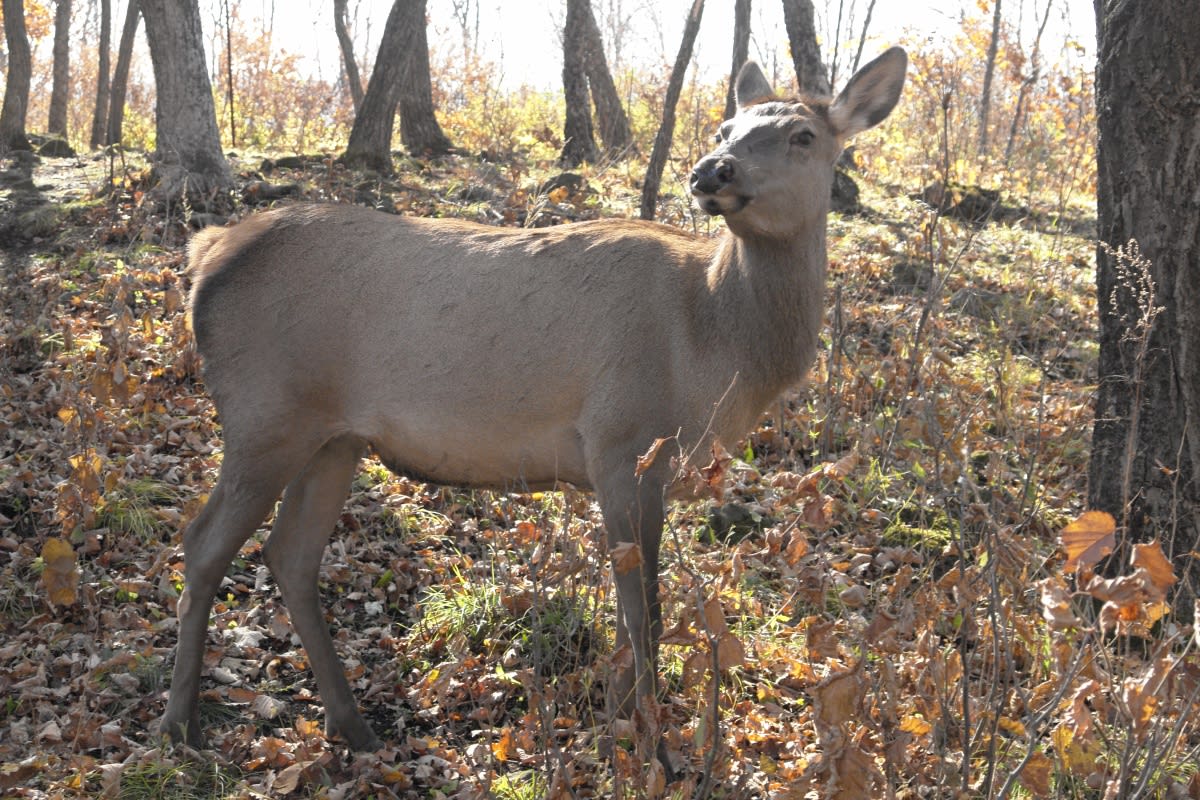
Smaller than the Altai wapiti. The summer coat is a vivid red, with the rump patch also reddish and merging with the body color so that it is almost indistinguishable. The winter coat is a uniform, dark grayish-brown, contrasting with the rump patch, which is less red than in summer. The rump patch is very large and divided by a narrow dark stripe. The Manchurian wapiti has a longer and narrower muzzle than other Asian or American wapitis. The antlers are relatively weak, especially in the upper tines. A very good set will have five or six points on a side and measure 35-40 inches (89-102 cm) in beam length.
Taxonomy
- Kingdom
- Animalia
- Phylum
- Chordata
- Class
- Mammal
- Order
- Artiodactyla
- Family
- Cervidae
- Genus
- Cervus
- Species
- Cervus canadensis
Habitat
This wapiti inhabits lightly wooded areas with ample clearings. Distribution- Russia: Southeastern Siberia in the Amur-Ussuri River region. China: Extreme northeastern Inner Mongolia, Heilongjiang, eastern Jilin, and eastern Liaoning. North Korea: Hamgiong Mountains. Boundaries with the Altai wapiti to the west are unclear. In addition to the wild populations, about 50,000 of this subspecies are on deer farms in China.
Diet
This animal both grazes and browses based on seasonal availability.
Behavior
The rut is during September, with the calves born May and June. Reportedly does not bugle during the rut. Known to hybridize with sika deer in southeastern Siberia.
Hunting
A variety of hunting methods can be utilized based on the season. Some find still hunting and the use of bugle calls effective during the rut, while later in winter spot and stalk methods are used.
Conservation Status
Listed as Least Concern by IUCN. However this classification refers to the species as a whole, not the Manchurian Wapiti specifically. Population estimates for this subspecies are not well-defined.