
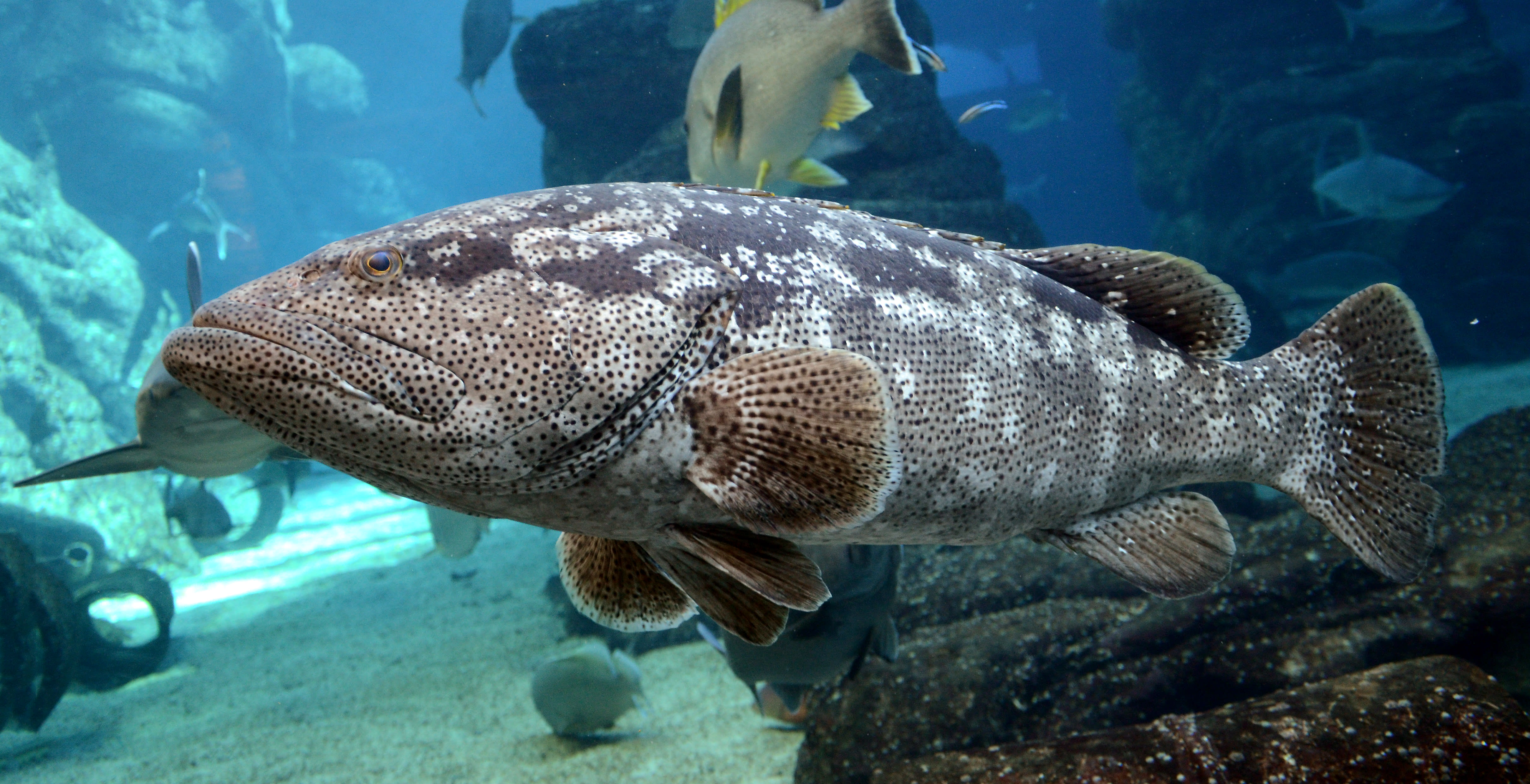
Taxonomy
- Kingdom
- Animalia
- Phylum
- Chordata
- Class
- Actinopterygii
- Order
- Scorpaeniformes
- Family
- Serranidae
- Genus
- Epinephelus
- Species
- malabaricus
Habitat
Primarily inhabits coral reefs, rocky substrates, and lagoons in tropical and subtropical marine environments. It prefers depths from 10 to 150 meters across the Indo-Pacific region, including the Red Sea, East Africa, and Australia. These areas provide ample hiding spots and prey.
Diet
Feeds mainly on fish, crustaceans, and cephalopods such as squid. It employs an ambush strategy, hiding among corals and striking quickly at prey. Feeding activity peaks during the day in its reef habitats.
Behavior
Malabar groupers are solitary and territorial, aggressively defending their reef areas from intruders. They are primarily diurnal, active during the day for hunting, but may rest in crevices at night. During spawning seasons, they form large aggregations, which is a notable social behavior.
Fishing
Anglers targeting the Malabar grouper, a prized sport fish in the Indo-Pacific region including the Red Sea, East Africa Coast, Australia, and Western Central Pacific Ocean, should focus on bottom fishing or jigging techniques around coral reefs and rocky substrates in depths of 10 to 150 meters, where these solitary predators ambush prey; use heavy tackle like a stout rod with 30-50 pound test line, a strong reel, and a sturdy hook to handle their powerful runs and the rough habitat. Opt for live bait such as small fish, squid, or crustaceans, or effective lures like jigs and metal spoons that mimic their natural diet of fish and cephalopods for the best strikes. The prime season runs from warmer months during spawning aggregations, typically late spring to summer, with peak activity in the daytime when they are most active; target dawn to dusk for higher success rates in lagoons and reef edges. The IGFA all-tackle world record stands at 83 pounds 12 ounces, caught in the Indian Ocean, showcasing the thrill of pursuing these impressive fish that can reach up to 2.3 meters. As a Near Threatened species per IUCN, conservation is key—angler-funded programs support habitat protection and stocking efforts, while regulations like slot limits and catch-and-release practices in many areas are effective tools to maintain healthy populations and ensure sustainable fishing for future generations.
Conservation Status
Listed as Near Threatened by IUCN.