
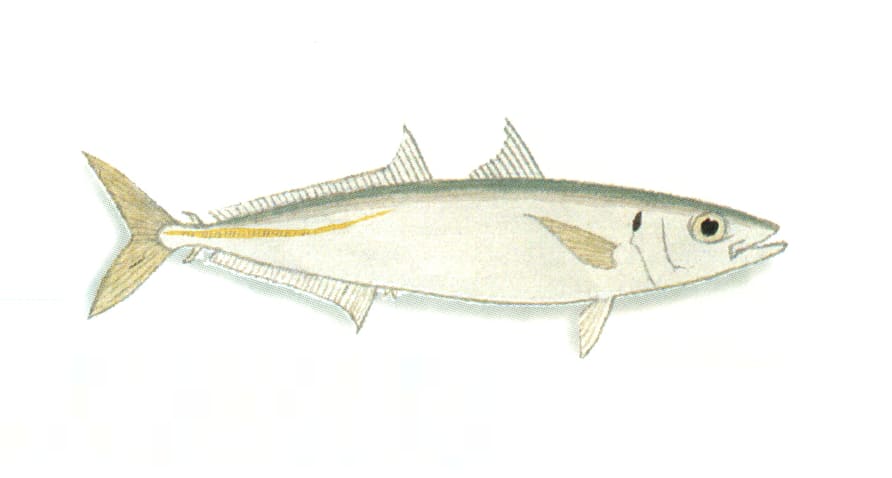
Taxonomy
- Kingdom
- Animalia
- Phylum
- Chordata
- Class
- Actinopterygii
- Order
- Cichliformes
- Family
- Carangidae
- Genus
- Decapterus
- Species
- macarellus
Habitat
Mackerel scad primarily inhabit open pelagic waters of tropical and subtropical oceans, often near the surface or around continental shelves. They prefer areas with moderate currents and abundant plankton, frequently found in schools near reefs, islands, or coastal zones. This species avoids extremely deep waters, staying in the upper 200 meters.
Diet
Mackerel scad feed mainly on zooplankton, small fish, and crustaceans such as copepods and shrimp larvae. They hunt in schools using visual cues, actively pursuing prey during daylight hours. Feeding activity intensifies in the early morning and late afternoon when prey is most available.
Behavior
Mackerel scad are highly schooling fish, forming large groups to enhance protection from predators and improve feeding efficiency. They are diurnal, most active during the day with rapid swimming bursts, and exhibit coordinated movements to evade threats. While not strongly territorial, they migrate seasonally in response to water temperature and food availability.
Fishing
Mackerel scad offer exciting light-tackle fishing opportunities in tropical and subtropical oceans, serving as a key species in conservation efforts funded by angler licenses and taxes that support marine habitat restoration. Target them using techniques like trolling with small lures, casting sabiki rigs, or jigging to intercept their fast-moving schools in open pelagic waters near reefs, islands, continental shelves, and coastal zones within the upper 200 meters. Recommended tackle includes light spinning or baitcasting rods with 6-10 lb test line, paired with small hooks (size 4-8) and lures such as metal jigs, spoons, or flashy bait imitations, along with live bait like shrimp, small fish, or crustaceans to mimic their diet of zooplankton and prey. The best seasons are spring through fall during their spawning periods, with optimal times in early morning and late afternoon when feeding activity peaks; adjust based on regional water temperatures in areas like the Atlantic or Pacific Oceans. The IGFA all-tackle world record is 1 pound 3 ounces, highlighting the species' modest size but thrilling fights. As a Least Concern species with stable populations, effective management tools like bag limits and seasonal regulations help maintain abundance, ensuring sustainable fishing that bolsters conservation programs protecting these vital pelagic ecosystems.
Conservation Status
Listed as Least Concern by IUCN.