
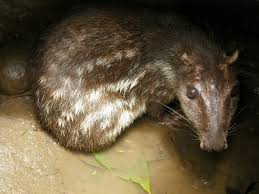
Taxonomy
- Kingdom
- Animalia
- Phylum
- Chordata
- Class
- Mammal
- Family
- Cuniculidae
- Genus
- Cuniculus
Habitat
Lowland Pacas primarily inhabit tropical rainforests, riverine areas, and swamps in Central and South America, from Mexico to Brazil. They prefer dense undergrowth and proximity to water sources for cover and foraging. These environments include lowland forests and areas with abundant vegetation for burrowing.
Diet
Lowland Pacas are herbivorous, feeding mainly on fruits, seeds, roots, leaves, and stems found in the forest understory. They forage nocturnally, using their strong incisors to gnaw on hard items like nuts, and play a role in seed dispersal. Their feeding behavior is solitary, helping them avoid predators during active hours.
Behavior
Lowland Pacas are primarily solitary or live in pairs, being nocturnal to evade predators and active during cooler night hours. They are territorial, marking areas with scent glands and creating burrows for shelter, and are agile swimmers that can cross rivers to escape threats. They exhibit a freeze response when alarmed before fleeing.
Hunting
The Lowland Paca is a game species hunted for meat in parts of Central and South America, where regulated subsistence hunting supports local wildlife management and conservation efforts; for instance, community-based programs in countries like Brazil, Peru, and Mexico use hunting quotas to maintain stable populations and fund habitat protection against threats like deforestation. Effective hunting methods include spot-and-stalk approaches in dense rainforests, using calls or baits to locate these nocturnal animals, with shotguns or small-caliber rifles such as .22 or .223 recommended for clean, ethical harvests at close range due to their size and skittish behavior; always prioritize precise shot placement to the vital areas like the head or chest for quick takedowns. The best seasons align with local regulations, typically during drier months from June to September when pacas are more active and easier to track, though exact timing varies by region and requires permits to ensure sustainable harvests. While not a trophy species, select larger individuals weighing 20-30 pounds with good body condition for quality meat, and hunters can participate in areas managed by indigenous communities or government programs that demonstrate how regulated hunting contributes to population health and anti-poaching initiatives, similar to successful models in the region that have stabilized species like this across their range.
Conservation Status
The IUCN classifies the Lowland Paca as Least Concern due to its wide range, but populations are declining in some areas from overhunting and habitat loss. Major threats include deforestation for agriculture and illegal hunting for bushmeat.