
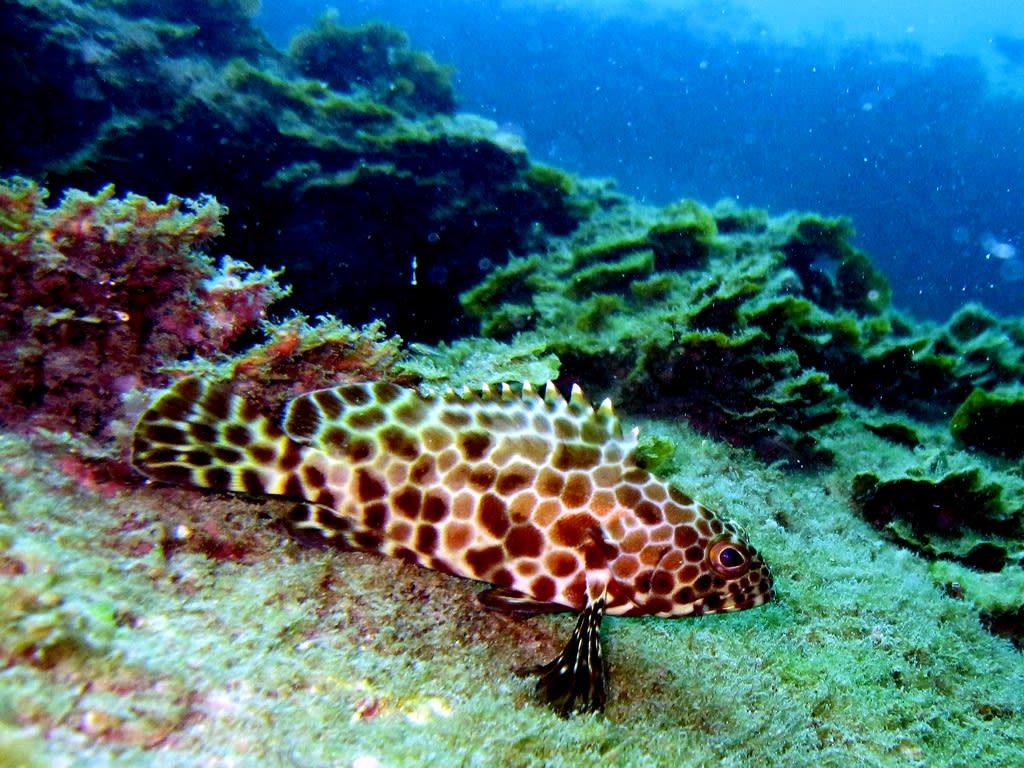
Taxonomy
- Kingdom
- Animalia
- Phylum
- Chordata
- Class
- Actinopterygii
- Order
- Scorpaeniformes
- Family
- Serranidae
- Genus
- Epinephelus
- Species
- quoyanus
Habitat
Longfin groupers inhabit coral reefs, rocky areas, and lagoons in the Indo-Pacific region. They prefer depths from 5 to 150 meters, often seeking shelter in crevices or under ledges. These environments provide ample hiding spots and abundant prey.
Diet
Longfin groupers primarily feed on small fishes, crustaceans, and cephalopods. They are ambush predators that hunt during the day, using their camouflage to surprise prey in coral reef environments. Feeding occurs mainly in the water column near structures.
Behavior
Longfin groupers are solitary and territorial, defending specific areas of the reef from intruders. They are diurnal, active during the day for hunting and resting at night in crevices. As protogynous hermaphrodites, they can change from female to male, which influences social dynamics in populations.
Fishing
Targeting the longfin grouper, a prized sport fish in the Indo-Pacific, involves effective techniques like bottom fishing with baited hooks or jigging around coral structures to mimic their prey, ensuring you drop lines near reefs and ledges for the best strikes; use medium-heavy rods with 20-50 lb test line, sturdy reels, and circle hooks to handle their powerful runs and reduce gut hooking for better catch-and-release success, paired with live baits such as small fish or crustaceans, or metal jigs and soft plastics that imitate their natural diet. The prime season runs from spring to summer when they aggregate for spawning, with daytime being optimal as they are diurnal hunters, so plan trips during these warmer months in locations like Thailand's Gulf of Siam or Australia's reefs at depths of 5 to 150 meters, focusing on coral reefs, rocky areas, and lagoons where they hide in crevices—always check local regulations, which serve as vital management tools to sustain populations, such as size limits or seasonal closures in places like Indonesia or the Philippines. The IGFA all-tackle world record for groupers in this genus isn't specifically listed, but longfin groupers can reach up to 100 cm, making them a thrilling catch that supports conservation through angler-funded programs; practicing catch-and-release helps maintain their stable, Least Concern status as per IUCN, contributing to habitat protection and population health in these biodiverse waters.
Conservation Status
Listed as Least Concern by IUCN.