
Overview
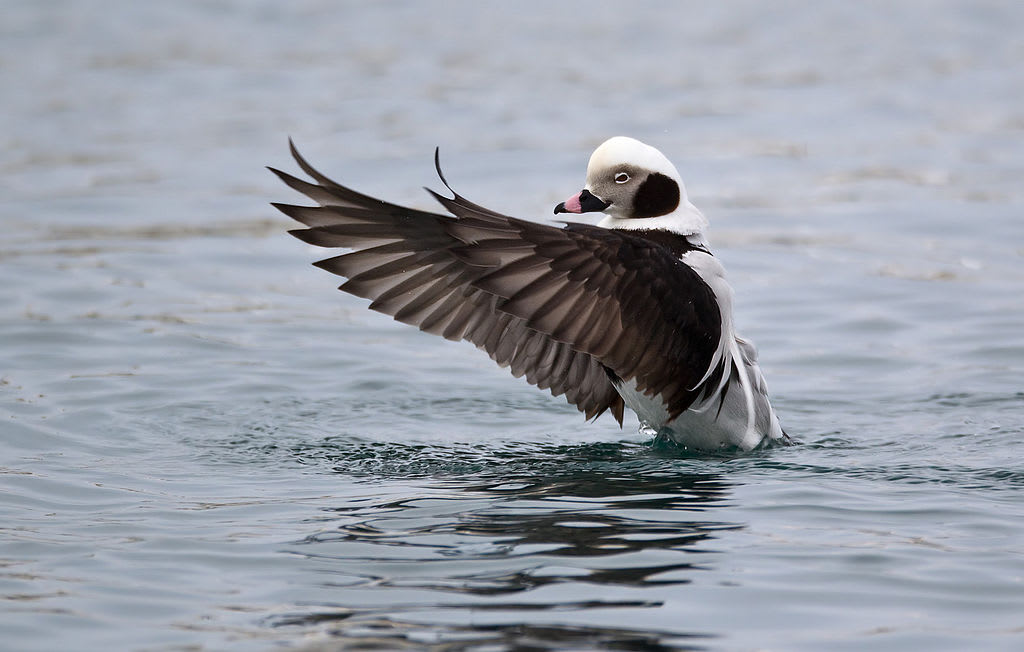
Adults have white underparts, though the rest of the plumage goes through a complex moulting process. The male has a long pointed tail (10 to 15 cm (3.9 to 5.9 in) long) and a dark grey bill crossed by a pink band. In winter, the male has a dark cheek patch on a mainly white head and neck, a dark breast and mostly white body. In summer, the male is dark on the head, neck and back with a white cheek patch. The female has a brown back and a relatively short pointed tail. In winter, the female's head and neck are white with a dark crown. In summer, the head is dark. Juveniles resemble adult females in autumn plumage, though with a lighter, less distinct cheek patch.
Taxonomy
- Kingdom
- Animalia
- Phylum
- Chordata
- Class
- Bird
- Family
- Anatidae
- Genus
- Clangula
- Species
- hyemalis
Habitat
Tundra pools and marshes, as well as along sea coasts and in large mountain lakes.
Diet
Mollusks, crustaceans and some small fish.
Behavior
The long-tailed duck is gregarious, forming large flocks in winter and during migration. They feed by diving, and although they usually feed close to the surface, they are capable of diving to depths of 60 m (200 ft).
Hunting
Unknown.
Conservation Status
Listed as Vulnerableby IUCN.