
Overview
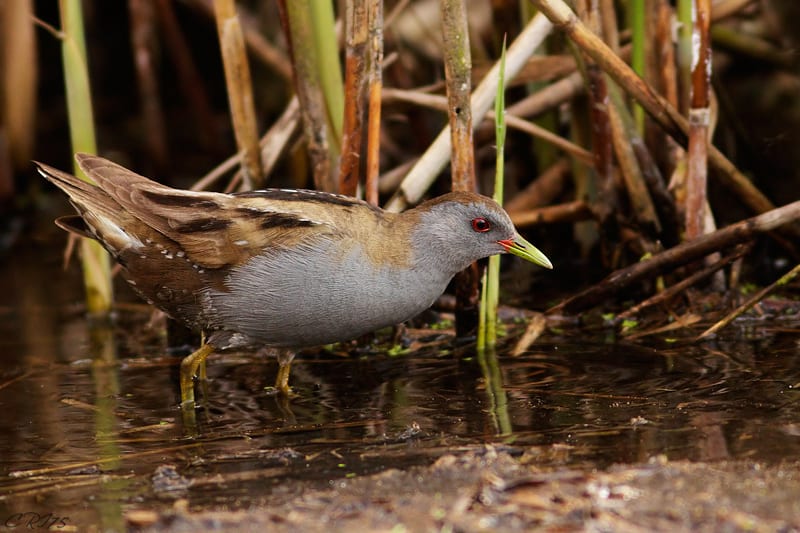
they are slightly smaller than the spotted crake, from which they are readily distinguished by the lack of dark barring and white spots on the flanks. The little crake has a short straight bill, yellow with a red base. They have green legs with long toes, and a short tail which is barred black and white underneath. Unlike other Porzana crakes, this species has strong sexual dimorphism: Adult males have mainly brown upperparts and blue-grey face and underparts. They resemble the sympatric Baillon's crake (P. pusilla), which has strongly barred flanks and is a little smaller. Females have buff underparts, and are grey only on the face; they are more similar to the yellow-breasted crake (P. flaviventer) of the American tropics. Immature little crakes are similar to the female but have a white face and breast. The downy chicks are black, as with all rails.
Taxonomy
- Kingdom
- Animalia
- Phylum
- Chordata
- Class
- Bird
- Family
- Rallidae
- Genus
- Zapornia
- Species
- parva
Habitat
Wetlands with ample reed beds for cover.
Diet
Insects and aquatic animals.
Behavior
These birds probe with their bill in mud or shallow water, also picking up food by sight. Little crakes are very secretive in the breeding season, and are then mostly heard rather than seen. They can be easier to see on migration. They are then noisy birds, with a yapping kua call. They nest in a dry location in reed vegetation, laying 4–7 eggs.
Hunting
More information needed.
Conservation Status
Listed as Least Concern by IUCN.