
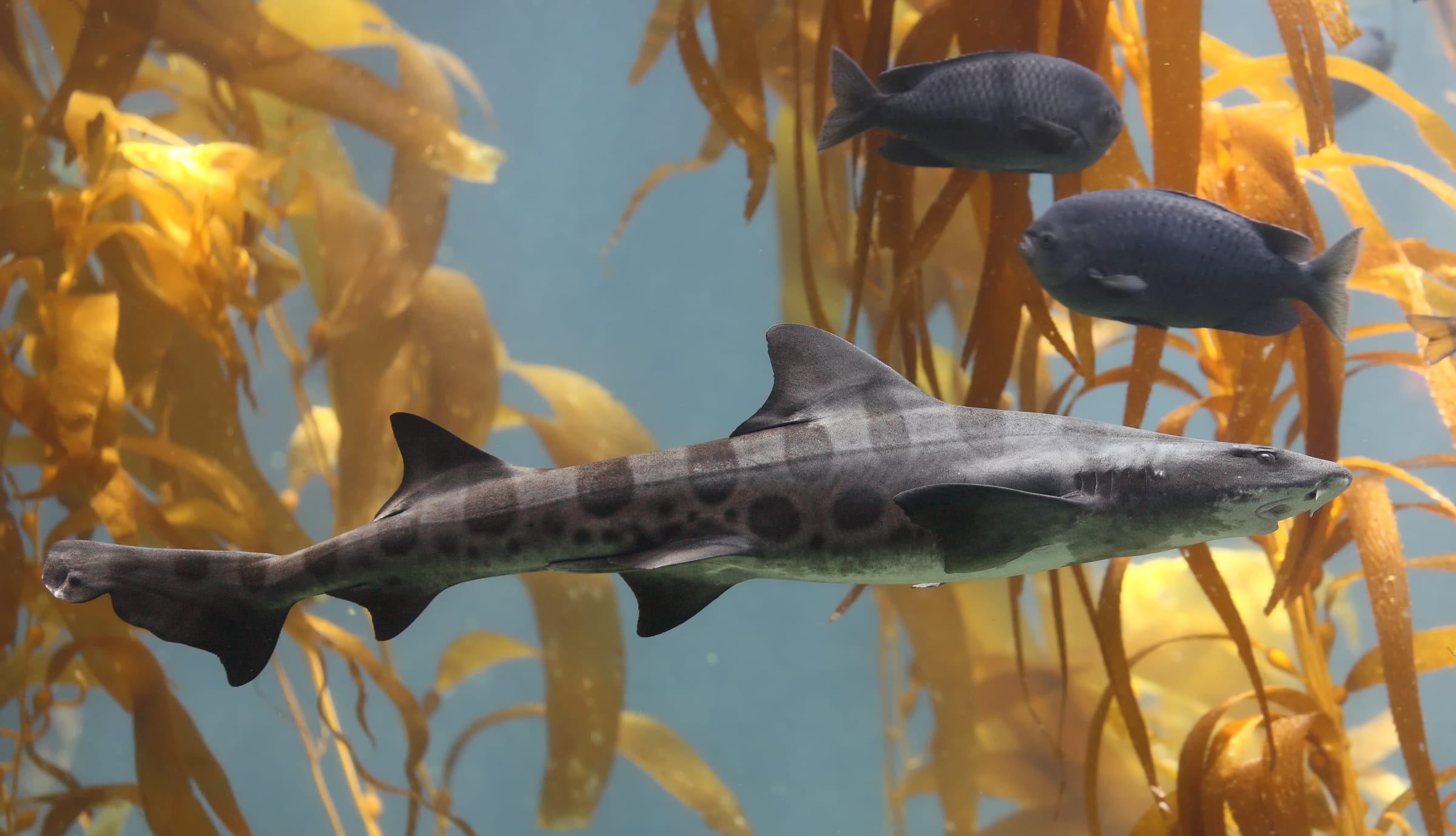
Taxonomy
- Kingdom
- Animalia
- Phylum
- Chordata
- Class
- Chondrichthyes
- Order
- Squaliformes
- Family
- Triakidae
- Genus
- Triakis
- Species
- semifasciata
Habitat
Leopard sharks primarily inhabit shallow coastal waters, bays, and estuaries along the Pacific coast from Oregon to Baja California. They prefer sandy or muddy bottoms in depths up to 130 feet, often seeking areas with ample cover like kelp beds or rocks.
Diet
Leopard sharks feed mainly on small fish, crabs, shrimp, and cephalopods such as squid. They are nocturnal bottom foragers, actively hunting at night on the ocean floor, and their feeding behavior adapts to prey availability in their habitat.
Behavior
Leopard sharks are primarily nocturnal, resting on the seafloor during the day and actively hunting at night, often in schools. They exhibit seasonal migrations along the coast for feeding and breeding, and while they can be somewhat social, they are not highly territorial.
Fishing
Leopard sharks provide thrilling sport fishing along the Pacific coast from Oregon to Baja California, contributing to conservation through angler license fees that support habitat restoration and protect these coastal ecosystems. Use bottom fishing techniques with medium-heavy rods (7-9 feet), reels equipped with 20-30 lb test monofilament or braided line, and circle hooks to promote safe catch-and-release; effective baits include live shrimp, crabs, small fish, or squid, while soft plastic lures mimicking these prey can also entice strikes. The best seasons are spring through fall, with peak activity in warmer months, targeting evening and night hours when they actively forage on the ocean floor. Focus on shallow coastal waters, bays, and estuaries with sandy or muddy bottoms up to 130 feet deep, particularly around kelp beds or rocky structures in areas like San Diego Bay or Samish Bay. The IGFA all-tackle world record is 19 pounds 0 ounces, caught in California in 1989. Follow regulations such as California's 36-inch minimum size limit and bag restrictions as smart management tools that maintain healthy, stable populations, encouraging catch-and-release practices to ensure leopard sharks remain a Least Concern species on the IUCN Red List.
Conservation Status
Listed as Least Concern by IUCN.