
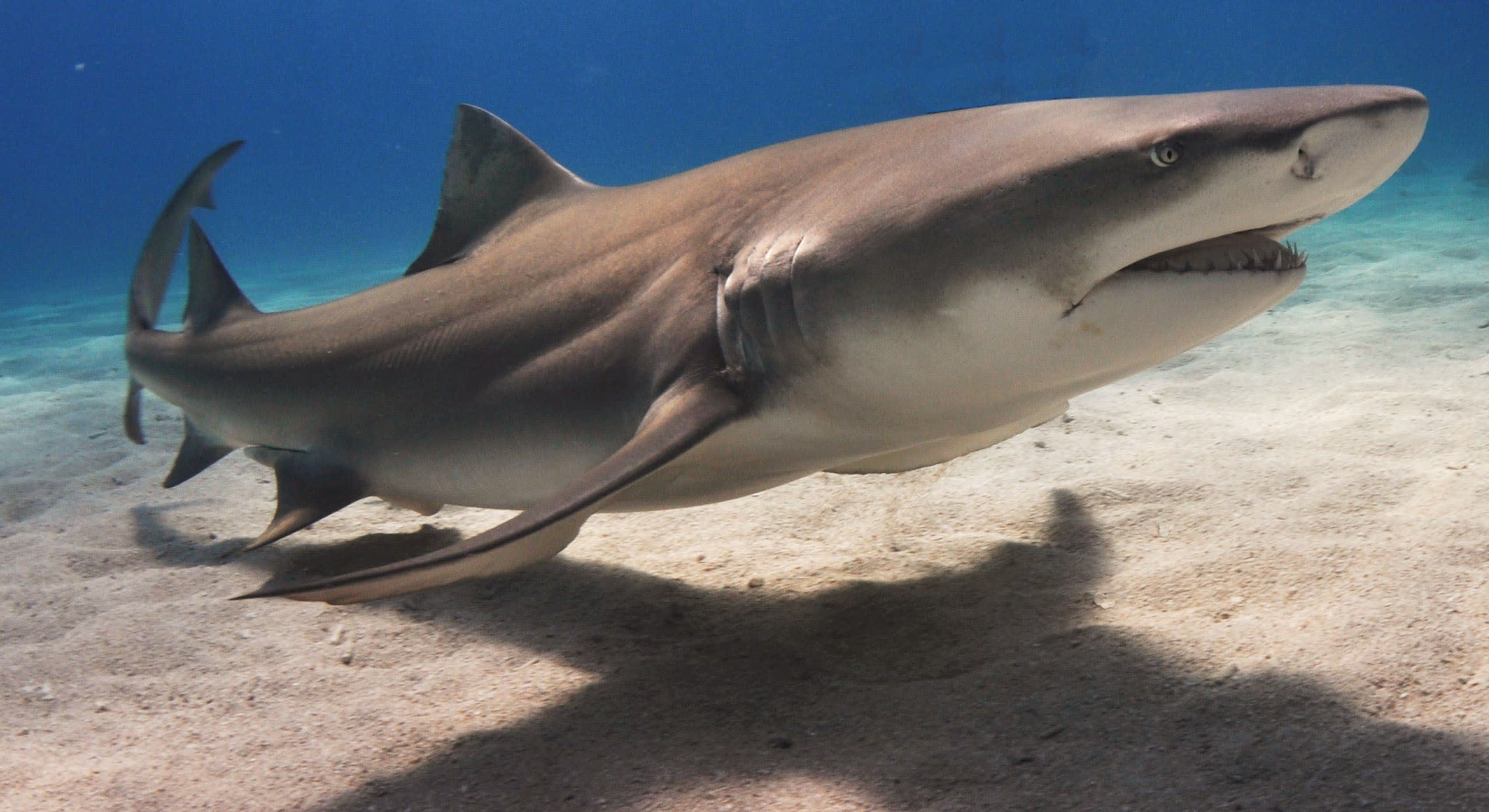
Taxonomy
- Kingdom
- Animalia
- Phylum
- Chordata
- Class
- Chondrichthyes
- Order
- Carcharhiniformes
- Family
- Carcharhinidae
- Genus
- Negaprion
- Species
- brevirostris
Habitat
Lemon sharks primarily inhabit shallow coastal waters, mangroves, and coral reefs in tropical and subtropical regions. They prefer warm marine environments with sandy or muddy bottoms, often staying in depths less than 30 meters, though they can venture to 300 meters. These areas provide ample prey and protection for juveniles.
Diet
Lemon sharks mainly feed on bony fish such as mullet and jacks, as well as crustaceans like crabs and shrimp. They are ambush predators that hunt primarily at dusk and dawn, using their electroreceptors to detect prey in murky waters. Occasionally, they consume smaller sharks or rays.
Behavior
Lemon sharks are social animals that often form schools, particularly juveniles in mangrove nurseries for protection. They are primarily nocturnal hunters, showing territorial behavior around feeding grounds, and exhibit curiosity towards divers without being aggressively territorial. These sharks are known for their intelligence, often returning to the same areas annually.
Fishing
Lemon sharks are a popular sport fish in tropical and subtropical coastal waters, offering anglers an exciting challenge that supports marine conservation through regulated fishing practices. Target them using heavy tackle such as 80-pound test monofilament or braided line, robust offshore rods (8-12 feet), and strong circle hooks to minimize injury during catch-and-release; effective baits include live mullet, jacks, or cut bait like mackerel to mimic their natural diet of bony fish and crustaceans. The best techniques involve bottom fishing, chumming to attract sharks, or slow trolling in shallow areas less than 30 meters deep, focusing on mangroves, coral reefs, and sandy or muddy bottoms in locations like the Bahamas, Belize, or the Florida Keys for optimal results. Prime seasons are year-round in warm waters, with peak activity at dawn and dusk when they hunt; always check local regulations as effective management tools, such as catch-and-release requirements in many areas, help maintain healthy populations. The IGFA all-tackle world record is 384 pounds, caught in 1988 off the Florida coast. Angler-funded programs, including license fees and excise taxes, play a vital role in conservation by supporting habitat restoration and stocking efforts, ensuring lemon sharks—listed as Near Threatened—remain a cornerstone of aquatic ecosystem protection.
Conservation Status
Listed as Near Threatened by IUCN.