
Overview
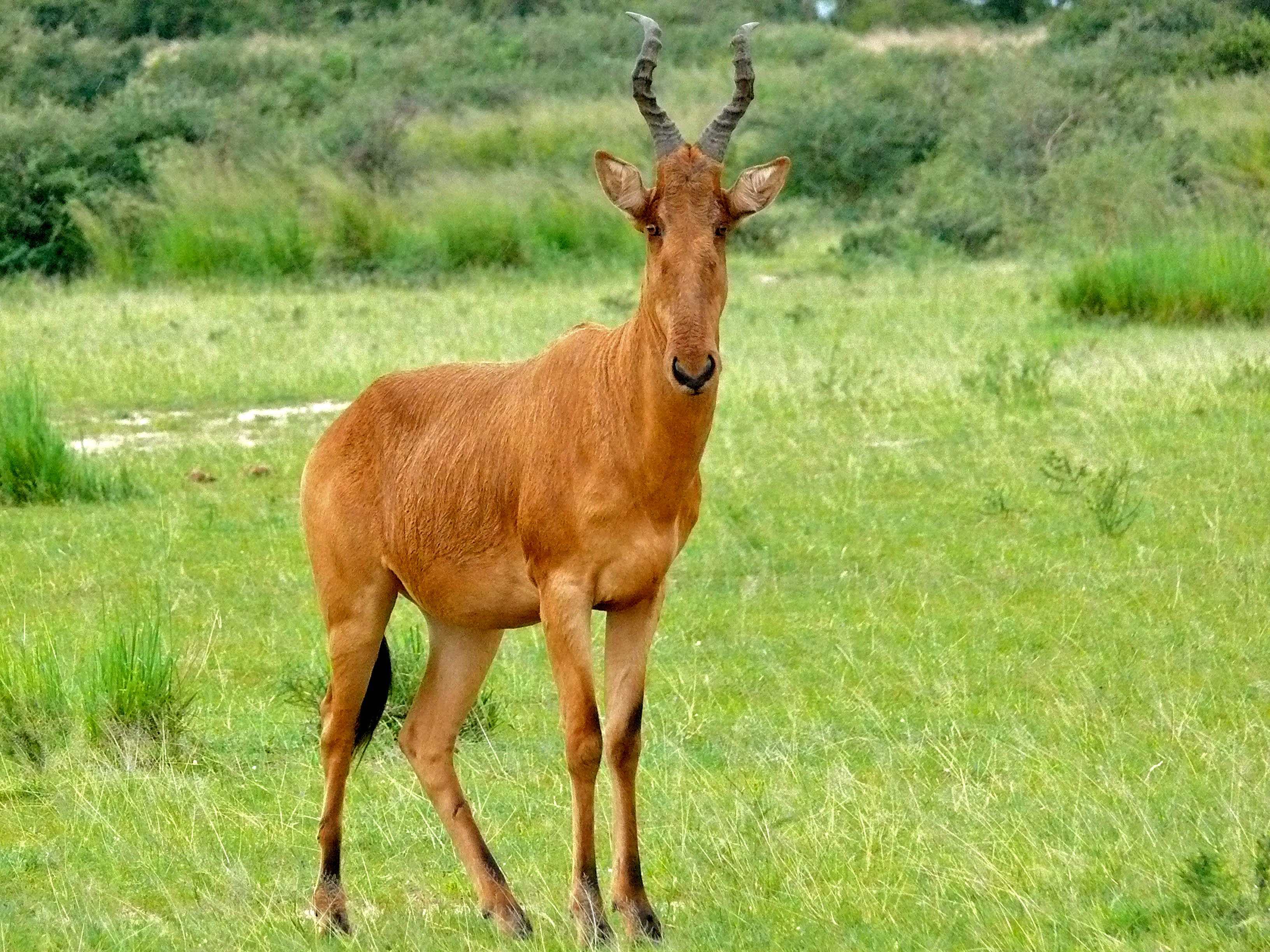
The Lelwel Hartebeest is a large hartebeest with an extremely long head and frontal pedicel. Overall color is reddish tan. There are dark stripes on the front of the legs in the lelwel, modestus and tschadensis races, but not in the jacksoni race. The horns (both sexes) are thick and V-shaped when viewed from the front. They grow slightly outward and backward, then upward and forward, and finally bend sharply backward.
Taxonomy
- Kingdom
- Animalia
- Phylum
- Chordata
- Class
- Mammal
- Order
- Artiodactyla
- Family
- Bovidae
- Genus
- Alcelaphus
- Species
- Alcelaphus buselaphus
Habitat
Open plains and scrublands. Distribution- Southern Chad; the Central African Republic; northeastern Congo (K); northern and western Uganda; southern Sudan; southwestern Ethiopia, south of the Blue Nile and west of the Omo River; and extreme northwestern Tanzania. Extinct in Kenya and, presumably, in Rwanda.
Diet
Primarily a grazer.
Behavior
Hartebeests have an excellent sense of hearing and smell, although their sense of sight is poor. When alarmed, hartebeests elude confusion before running, by which they can reach a maximum speed of 55 km/h. Their evasion tactic is to run in a zigzag pattern, making it difficult for predators to catch them.
Hunting
Mainly spot and stalk methods. Once alerted they may run for miles. They can be wary of vehicles which can be difficult when trying to make a stalk after spotting them from a safari vehicle. If crop fields are in the hunting area they are many times found in and around agriculture.
Conservation Status
Listed as Endangered by IUCN, with population estimated at under 70,000 today, and a total decrease of 50% in the most recent decades.