
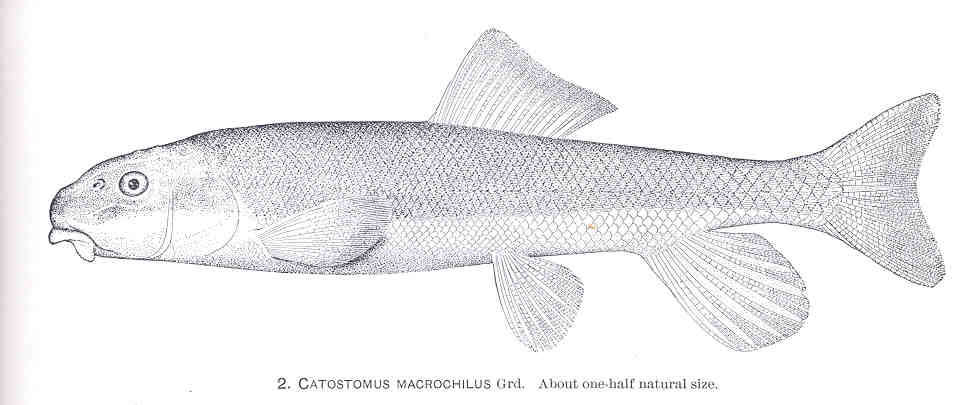
Taxonomy
- Kingdom
- Animalia
- Phylum
- Chordata
- Class
- Actinopterygii
- Order
- Cypriniformes
- Family
- Catostomidae
- Genus
- Catostomus
- Species
- macrocheilus
Habitat
Largescale suckers inhabit clear, cool freshwater rivers and streams in western North America, often in areas with gravel or rocky substrates. They prefer moderate currents and can be found in larger river systems like the Columbia and Snake Rivers, as well as smaller tributaries. These fish are adaptable but thrive in well-oxygenated waters with ample cover from rocks and vegetation.
Diet
Largescale suckers primarily feed on aquatic insects, algae, and detritus found on the river bottom, using their sucker-like mouth to scrape food from rocks and substrate. They are opportunistic bottom feeders, most active during dawn and dusk when they forage in shallow waters. Their diet helps control algae and insect populations in their ecosystems.
Behavior
These fish are generally solitary and nocturnal, spending much of their time hiding under rocks or in deeper pools during the day. They exhibit migratory behavior for spawning, moving upstream in spring, and can be territorial around feeding areas. Largescale suckers are not particularly aggressive but may compete with other bottom-feeders for resources.
Conservation Status
Listed as Least Concern by IUCN.