
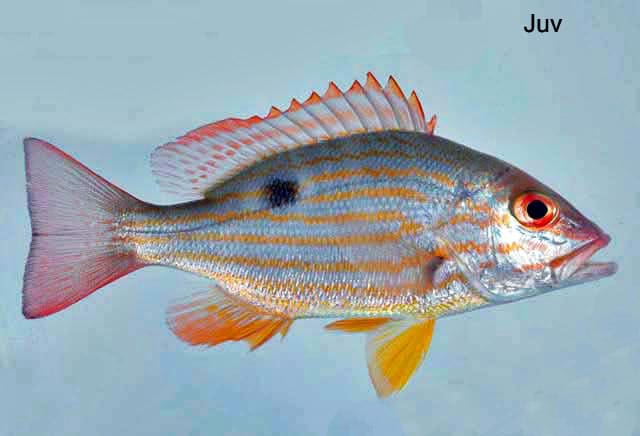
Taxonomy
- Kingdom
- Animalia
- Phylum
- Chordata
- Class
- Actinopterygii
- Order
- Perciformes
- Family
- Lutjanidae
- Genus
- Lutjanus
- Species
- synagris
Habitat
Lane snappers primarily inhabit coral reefs, rocky bottoms, and seagrass beds in the western Atlantic Ocean. They prefer depths ranging from 10 to 200 meters in warm, tropical waters. These fish are commonly found around the Caribbean, Gulf of Mexico, and along the coasts of South America.
Diet
Lane snappers mainly feed on small fish, shrimp, crabs, and occasionally worms or mollusks. They are opportunistic bottom-dwellers that hunt during the day, using ambush tactics near structures like reefs. Feeding activity peaks at dawn and dusk in their preferred habitats.
Behavior
Lane snappers are schooling fish that form loose groups over reefs and rocky areas for protection and feeding. They are diurnal, most active during the day, and exhibit territorial behavior when defending prime feeding spots. These fish can be cautious and quick to flee from threats, making them challenging to approach.
Fishing
Lane snapper is a popular sport fish in the western Atlantic, Caribbean, and Gulf of Mexico, prized for its fighting spirit and excellent table fare, with recreational fishing playing a key role in funding conservation through license fees and excise taxes that support habitat restoration. Target them using bottom fishing techniques like dropping bait to the seafloor or vertical jigging around coral reefs, rocky bottoms, and seagrass beds in depths of 10 to 200 meters, where they school and ambush prey—focus on structure-rich areas for the best results. Use medium-heavy rods with 20-30 pound test line, sturdy reels, and circle hooks to minimize injury during catch-and-release; effective baits include live shrimp, cut fish, or crabs, while jigs and soft plastics mimic their natural diet of small fish and crustaceans. The best seasons are spring through fall during spawning periods, with peak activity at dawn and dusk when feeding intensifies, though they can be caught year-round in tropical waters—check local regulations for closed seasons as effective management tools to sustain populations. The IGFA all-tackle world record stands at 8 pounds 3 ounces, caught in 1990 off the Florida Keys, USA, showcasing the thrill of targeting larger individuals. As a Near Threatened species per IUCN, practice catch-and-release for fish under slot limits (typically 10-14 inches in many regions) and adhere to bag limits, which help maintain healthy stocks; angler-supported programs, like those funding marine protected areas, ensure these fisheries thrive while protecting critical habitats from overfishing and degradation.
Conservation Status
Listed as Near Threatened by IUCN.