
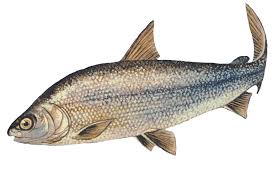
Taxonomy
- Kingdom
- Animalia
- Phylum
- Chordata
- Class
- Actinopterygii
- Order
- Perciformes
- Family
- Salmonidae
- Genus
- Coregonus
- Species
- clupeaformis
Habitat
Lake whitefish primarily inhabit deep, cold, oligotrophic lakes and large rivers in northern North America, including the Great Lakes, Alaska, and parts of Canada and the northern United States. They prefer clear waters with rocky or sandy substrates and depths ranging from 10 to 100 meters. These fish avoid warm or polluted waters, thriving in oxygen-rich environments.
Diet
Juvenile lake whitefish feed on zooplankton and small insects, while adults consume benthic invertebrates such as mollusks, insect larvae, and amphipods. They are bottom-feeders that forage primarily at night or in low-light conditions. Feeding behavior involves sifting through sediment to extract food items.
Behavior
Lake whitefish are schooling fish that form loose groups, especially during migration and feeding. They are most active in cooler water temperatures, often migrating to shallower areas in fall for spawning and retreating to deeper waters in summer. These fish exhibit nocturnal feeding habits and are generally non-territorial, though they may compete for food resources.
Fishing
As a valued sport and food fish in northern North America, lake whitefish play a key role in conservation by generating funds through angler license fees that support habitat restoration in the Great Lakes and other cold-water ecosystems; targeting them responsibly helps maintain healthy populations for future generations. For the best results, use jigging or bottom fishing techniques to mimic their nocturnal feeding habits, focusing on drifting baits along the bottom or trolling with light setups in deep waters; effective methods include vertical jigging with soft plastics or live bait rigs to entice these schooling fish. Opt for light to medium-action spinning rods paired with 6-10 pound test monofilament line, size 6-10 hooks, and a simple slip sinker rig to reach depths of 10-100 meters without spooking them; top baits and lures include nightcrawlers, minnows, or jigs tipped with worms to imitate their diet of benthic invertebrates. The prime season is fall during spawning runs in October to December, with excellent fishing in spring and early summer mornings or evenings in cooler water temperatures below 50°F, when they migrate to shallower rocky or sandy substrates in oligotrophic lakes like those in the Great Lakes basin, Alaska, or Minnesota. Target clear, oxygen-rich habitats in deep parts of these lakes or large rivers, avoiding warm or polluted areas for the best catches. The IGFA all-tackle record stands at 14 pounds 6 ounces, caught in Canada, with typical sizes ranging from 12-20 inches and trophies up to 31 inches. Conservation efforts, such as slot limits and catch-and-release practices in many regions, are effective management tools that ensure sustainable populations, bolstered by angler-funded programs that protect waterways and support stocking initiatives for species like lake whitefish.
Conservation Status
Listed as Not Evaluated by IUCN.