
Overview
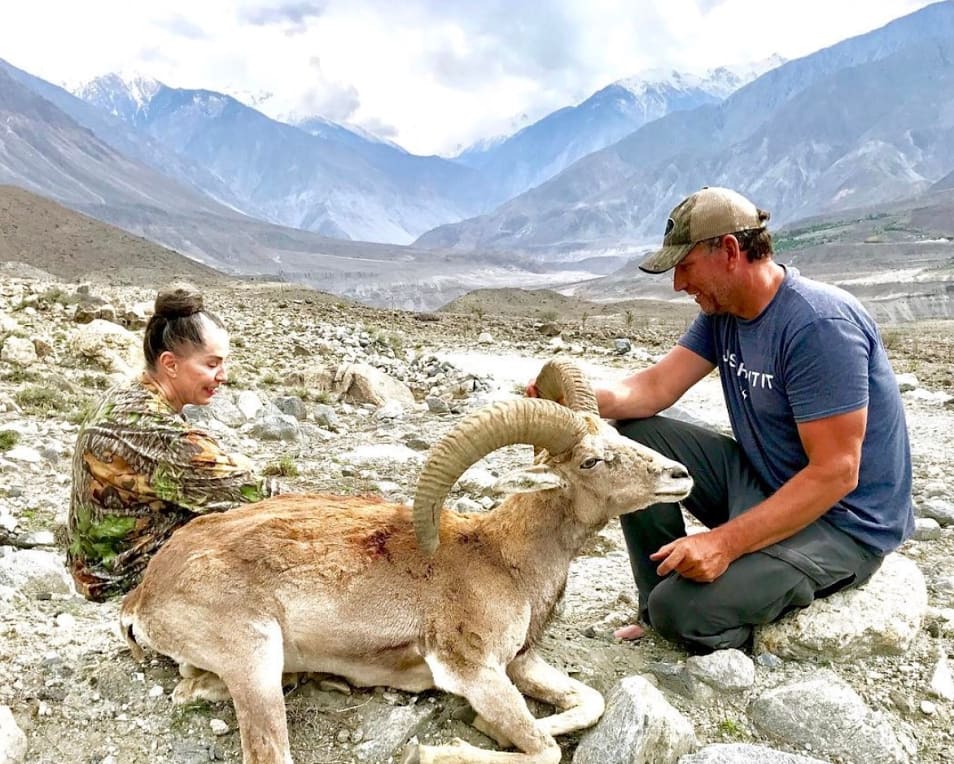
The urial is considered one of the smaller species of wild sheep. Overall color is reddish-tan. Rump patch, muzzle, belly and lower legs are white. A dark band separates the belly from the upper body. Males have a white bib, a black neck ruff and a grayish saddle patch in the winter coat. It has the most fully developed neck ruff of the urial subspecies. The horn conformation varies, usually tending to curve above and behind the neck (supracervical), but some animals have homonymous horns or cervical ones. The horns rise steeply from the head and are strongly corrugated. They sometimes attain a full circle, but seldom exceed that. The horns curl on a flat plane, seldom spiralling or flaring at the tips. The record horns measured 39.5 inches (100.3 cm) long with 12 inch (30.5 cm) bases (Rowland Ward, 1921).
Taxonomy
- Kingdom
- Animalia
- Phylum
- Chordata
- Class
- Mammal
- Order
- Artiodactyla
- Family
- Bovidae
- Genus
- Ovis
- Species
- Urial, vignei
Habitat
These animas frequent grassy slopes below the timberline, and rarely move to the rocky areas of the mountains.
Diet
Primarily consume grass but will browse when necessary.
Behavior
The mating season begins in September across this animal's native habitat. Rams will determine hierarchy based on age, aggression, and horn size, often battling other males for the right to breed. Dominant males will select 4-5 ewes, who will give birth to one or two lambs after 5 months of gestation.
Hunting
In 2017 two Ladakh Urials were taken legally for the first time in Pakistan and entered into the record book. It took much effort in working through the bureaucratic and political process, but Pir Danish Ali, owner of Indus Safaris, was able to arrange these permits. In the particular area where the animals were taken, they counted 64 animals in the hunting area prior to the hunt. Of the two that were harvested, DNA samples were collected, and the locals recieved a large sum of money as a part of a community-based hunting program. These locals now protect this species diligently.
Conservation Status
Listed as Endangered by the USF&WS (1976) and on Appendix I of CITES (1975).