
Overview
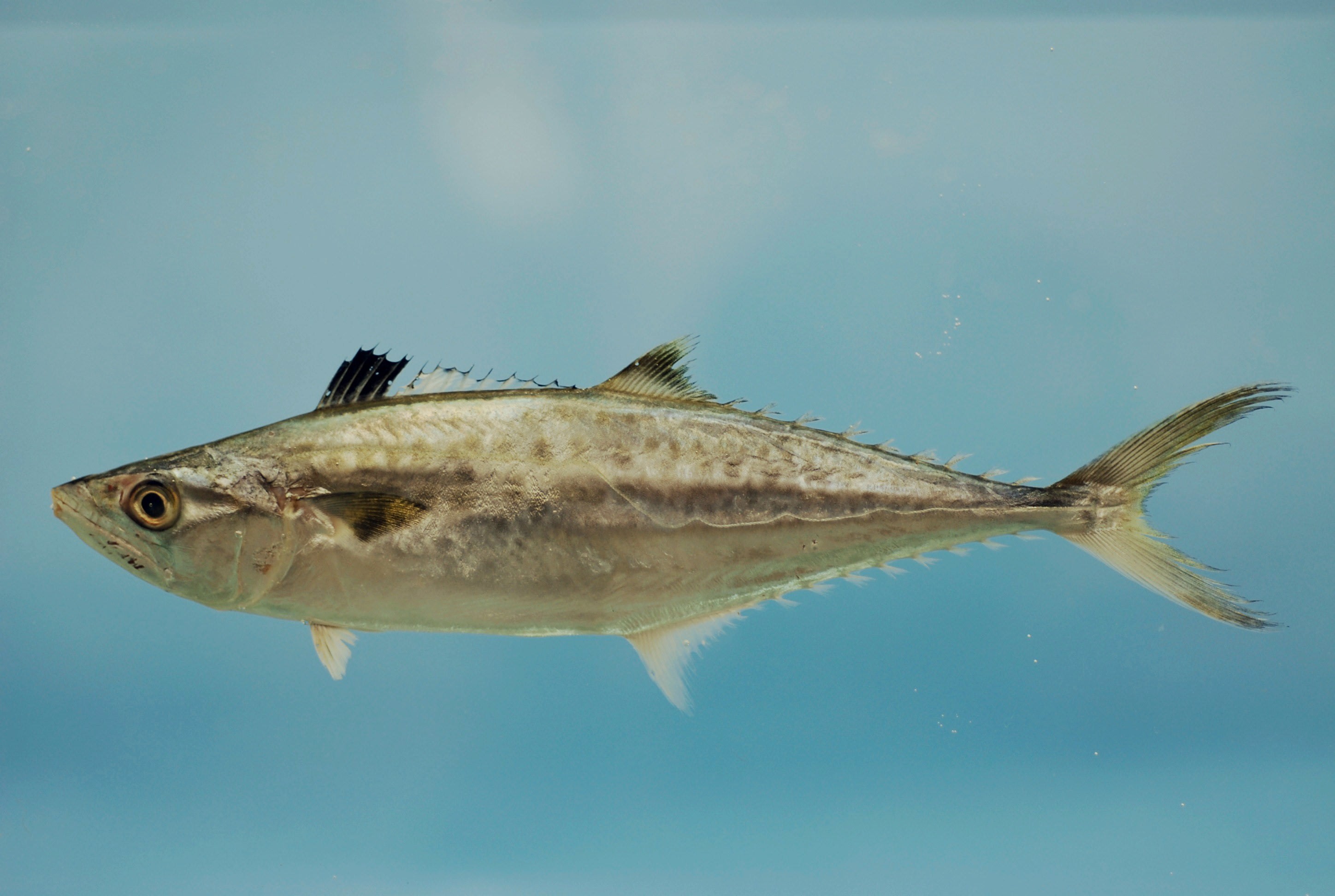
They can be distinguished from other Spanish mackerels in the western Atlantic by the sharp dip in the lateral line under the second dorsal fin, by the relatively small number of spines in the first dorsal fin (14 16). The young have spots similar to those in the Spanish mackerel, Scomberomorus maculatus, but these spots disappear with age. The first dorsal fin is uniformly blue; the anterior third of this fin is never black as it is in the Spanish mackerel and the cero mackerel, S. regalis.
Taxonomy
- Kingdom
- Animalia
- Phylum
- Chordata
- Class
- Actinopterygii
- Order
- Perciformes
- Family
- Scombridae
- Genus
- Scomberomorus
- Species
- cavalla
Habitat
A coastal, pelagic, schooling species, it is usually found in waters of 10 20 fathoms. Occasionally it may be caught from ocean piers and around inlets. Congregations often occur around wrecks, buoys, coral reefs, and other such areas where food is abundant. Schools vary in size and the largest individuals are usually loners.
Diet
King mackerel primarily feed on small fish such as sardines, menhaden, and anchovies, as well as squid and shrimp. They are active predators that hunt in schools during the day, using their speed to chase down prey in open ocean waters. Feeding often occurs near baitfish concentrations around reefs or wrecks.
Behavior
Schools vary in size and the largest individuals are usually loners.
Fishing
This is an important species, both commercially and as a sport fish. Fishing methods include trolling or drifting either deep or on the surface using strip baits, lures, or small whole baits as well as casting and live bait fishing. Balao, mullet, jacks, herring, pinfish, croakers, shrimp, spoons, feathers, jigs, and plugs have proven effective under various conditions, as have such combinations as feather strip bait and skirt strip bait. Chumming works well to attract and hold these fish
Conservation Status
Listed as Least Concern by IUCN.